
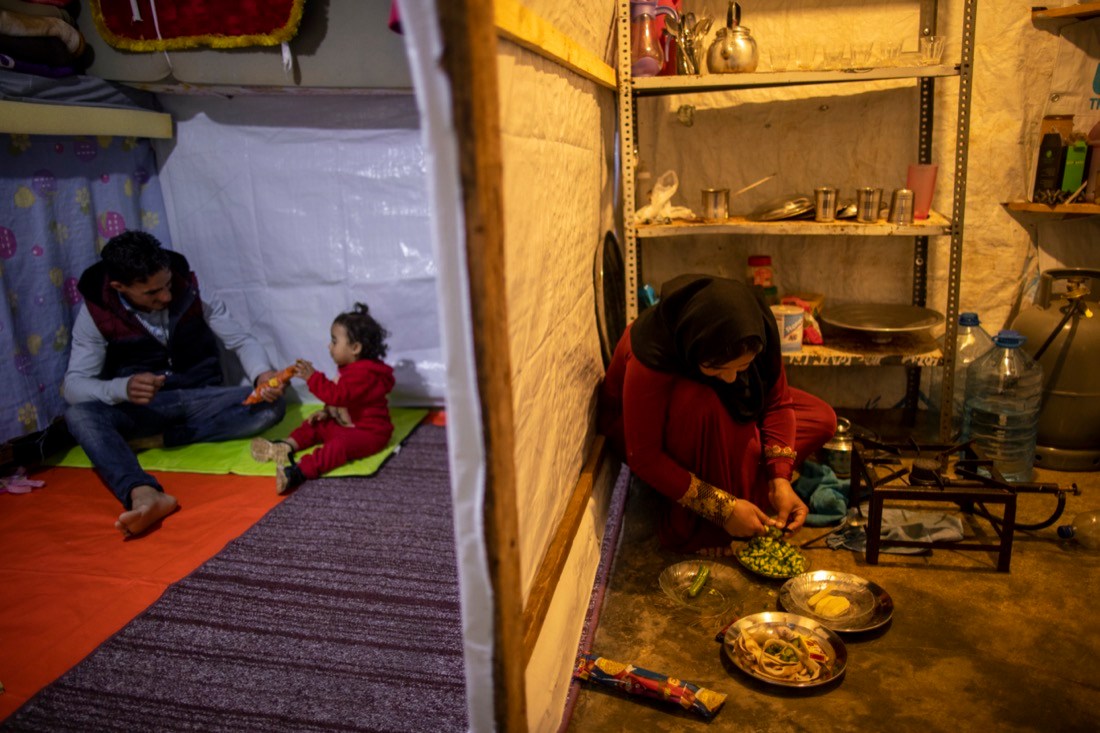
BHANNINE, Lebanon (AP) – It was messy and hectic in Aisha al-Abed’s kitchen, as the first day of Ramadan often is. Food had to be on the table at precisely 7:07 p.m. when the sun sets and the daylong fast ends.
What is traditionally a jovial celebration of the start of the Muslim holy month around a hearty meal was muted and dispirited for her small Syrian refugee family.
As the 21-year-old mother of two worked, with her toddler daughter in tow, reminders of life’s hardships were everywhere: In the makeshift kitchen, where she crouched on the ground to chop cucumbers next to a single-burner gas stove. In their home: a tent with a concrete floor and wooden walls covered in a tarp. And, definitely, in their iftar meal — rice, lentil soup, french fries and a yogurt-cucumber dip; her sister sent over a little chicken and fish.
“This is going to be a very difficult Ramadan,” al-Abed said. “This should be a better meal … After a day’s fast, one needs more nutrition for the body. Of course, I feel defeated.”
Ramadan, which began Tuesday, comes as Syrian refugees’ life of displacement has gotten even harder amid their host country Lebanon’s economic woes. The struggle can be more pronounced during the holy month, when fasting is typically followed by festive feasting to fill empty stomachs.