
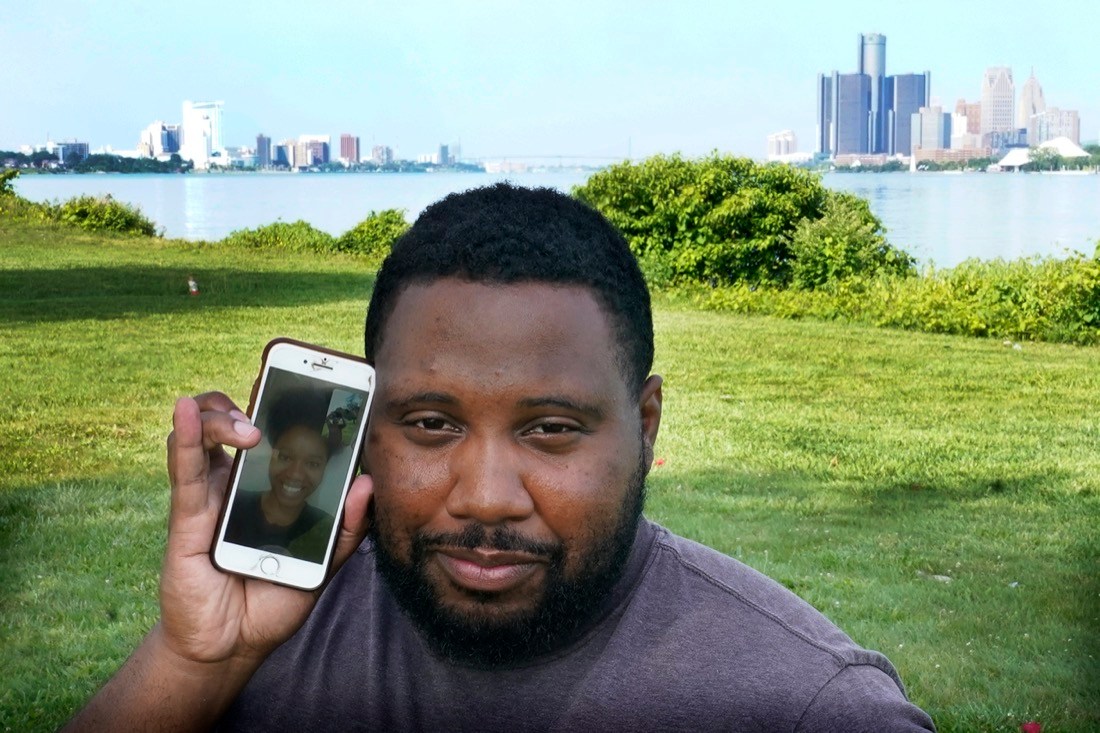
NEW YORK (AP) – Quintin Sweat and Renée Harrison live only 15 minutes apart by car, with the U.S.-Canada border between them.
But the couple, who got engaged in 2019, has only been able to be together three times during the pandemic. Travel restrictions mean Harrison must drive four hours from her Windsor, Ontario home to the Toronto airport in order to fly to Detroit where Sweat lives. For Sweat, it means a mandated two-week stay in Canada.
The two even drove to the outer limits of their respective borders just to see each other but they were still so far away that they “looked like dots,” Sweat said.
“She’s gone to the edge of Windsor and I’ve gone to the edge of Detroit and we can see each other, but we can’t actually be with each other,” he said. They have delayed their wedding to 2022.
Since the start of the pandemic, a constantly changing and confusing web of travel restrictions have separated loved ones around the world. For people whose lives cross international borders and for immigrants who leave their homes behind to move to a new country, not knowing when they can see their relatives again compounds the pain of separation.