
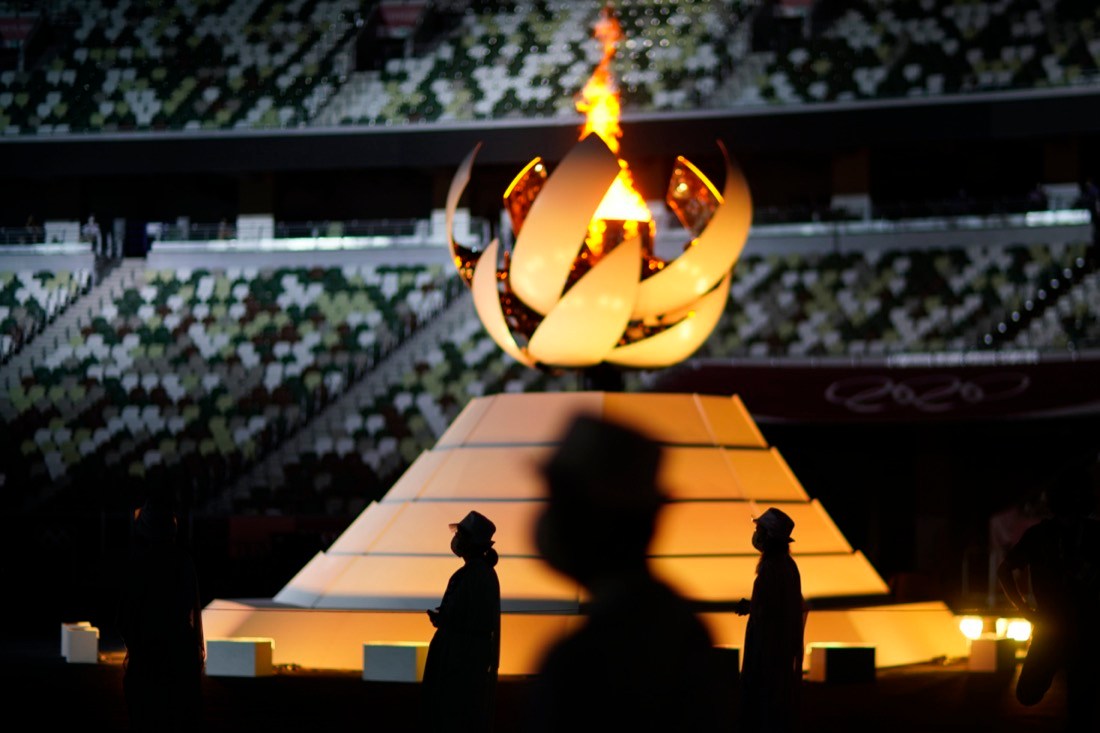
TOKYO (AP) – It began with a virus and a yearlong pause. It ended with a typhoon blowing through and, still, a virus. In between: just about everything.
The Tokyo Olympics, christened with “2020” but held in mid-2021 after being interrupted for a year by the coronavirus, glided to their conclusion in a COVID-emptied stadium Sunday night as an often surreal mixed bag for Japan and for the world.
A rollicking closing ceremony with the theme “Worlds We Share” – an optimistic but ironic notion at this human moment – featured everything from stunt bikes to intricate light shows as it tried to convey a “celebratory and liberating atmosphere” for athletes after a tense two weeks. It pivoted to a live feed from Paris, host of the 2024 Summer Games. And with that, the strangest Olympic Games on record closed their books for good.
Held in the middle of a resurging pandemic, rejected by many Japanese and plagued by months of administrative problems, these Games presented logistical and medical obstacles like no other, offered up serious conversations about mental health – and, when it came to sport, delivered both triumphs and a few surprising shortfalls.
From the outset, expectations were middling at best, apocalyptic at worst. Even Thomas Bach, president of the International Olympic Committee, said he’d worried that these could “become the Olympic Games without a soul.” But, he said, “what we have seen here is totally different.”