
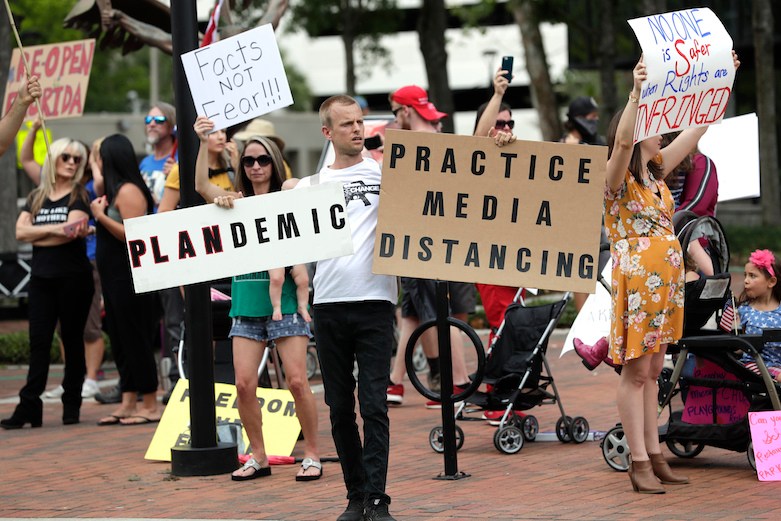
COVID-19 is a nightmare that has left more than 600,000 people dead in the United States alone. But from the very start it was also a clear dress rehearsal for the looming global catastrophe of climate change, which is barreling toward us and likely to wreak more damage than the pandemic.
Early on, it seemed like COVID-19 might sober us up, and teach us some useful lessons for that other great and imminent threat. Perhaps the coronavirus would force us to acknowledge that there really are invisible dangers in the world, and that there really are experts who know more than we do.
Climate activist Bill McKibben suggested something along those lines. “This might be the moment when we decide to fully embrace the idea that science, you know, works,” he wrote back in March 2020. U.N. Secretary-General António Guterres called COVID-19 a “wake-up call” for climate change.
But here in the United States, we did not rise to the occasion. We did not wake up. Instead, we bungled much of our response to COVID-19.
I was reminded of that again Monday when the United Nations’ Intergovernmental Panel on Climate Change issued its most dire report yet. The IPCC concluded that humans can no longer reverse some of climate change’s effects or stop its intensification over the next three decades. Therefore, we should expect more raging storms, devastating heat waves, harrowing floods, out-of-control fires, severe droughts and other “extreme events unprecedented in the observational record.”