
Saturday, November 14, 2026Nov 14

Historic American church set to integrate its slavery ties

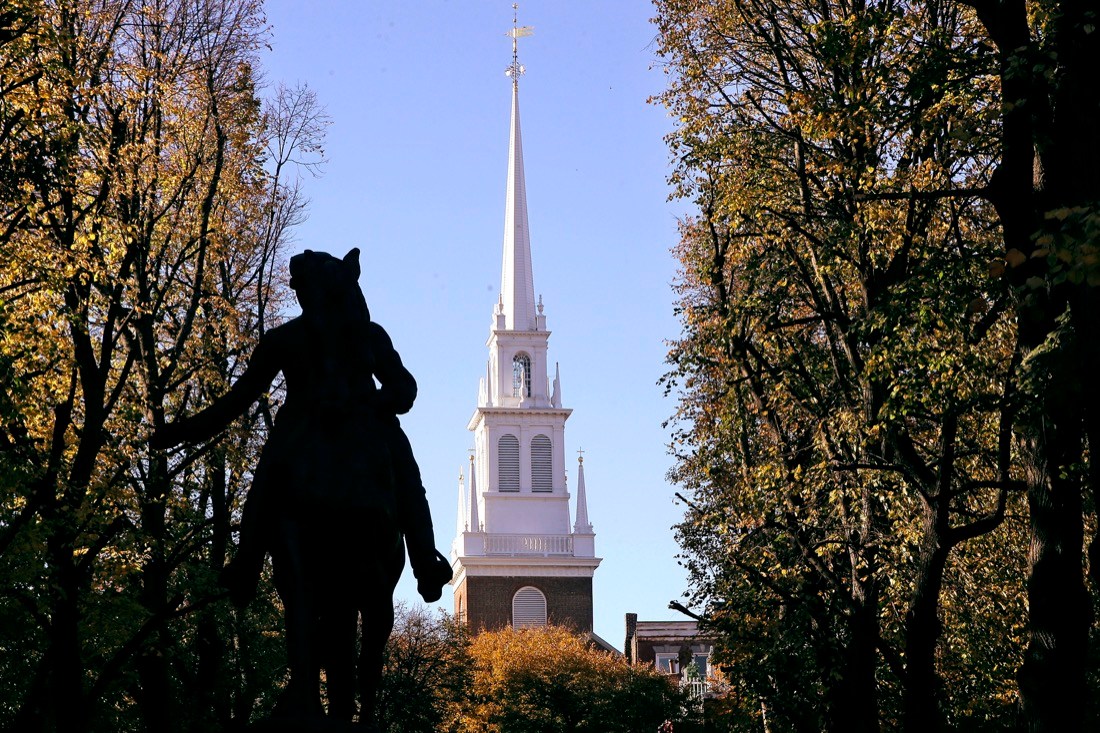
FILE— In this Nov. 7, 2018 file photograph, the Old North Church stands behind a statue of Paul Revere in the North End neighborhood of Boston. The church is famous as the place where in 1775 two lanterns in the steeple signaled that the British were heading to Concord and Lexington, but it's not well known that some of the church's early congregants were slave holders. Now the church, with a grant from the National Endowment for the Humanities, is integrating that history into its educational mission. (AP Photo/Steven Senne, File)

The great contradiction of Boston’s Old North Church is that a site pivotal to the freedom of the nation is the same place where slave owners and traders once worshiped.

Now, with a $75,000 grant from the National Endowment for the Humanities announced Tuesday, the foundation responsible for the preservation of the church campus and the visitor experience plans to overhaul its educational programming to better reconcile and integrate those ties to slavery.

The grant is one of $28.4 million in grants for about 240 projects nationwide.

“We’ll be able to address what I call the paradox of the Old North Church,” said Nikki Stewart, executive director of the Old North Foundation, which is distinct from the active Episcopal congregation that still uses the site for religious services. “People see us as a symbol of liberty and independence, but the reality is that the church benefitted from the enslavement of Africans.”

For example, the famous steeple was financed in part by the sale of logwood, the harvesting of which was dependent on slave labor, she said.