
Thursday, October 29, 2026Oct 29

This story is free to read.

Cook: Critical race theory, the body and tenderness

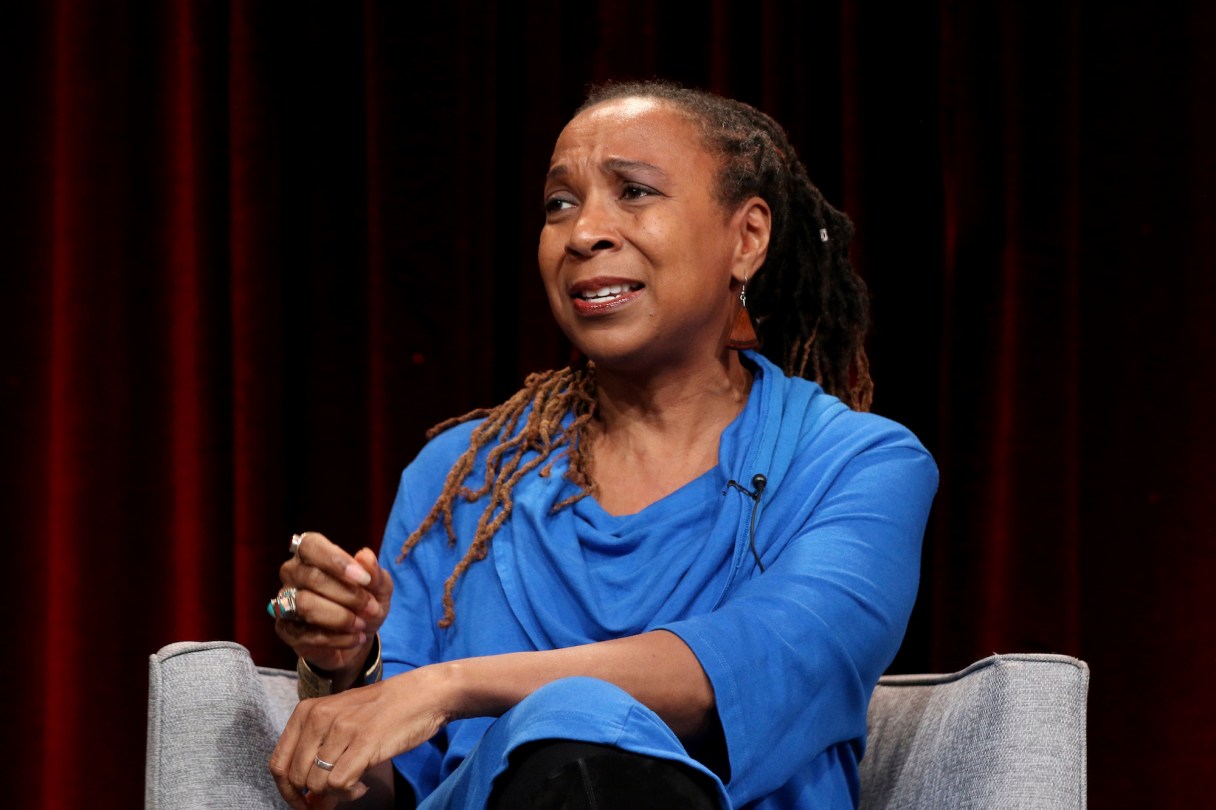
FILE - In this Feb. 2, 2019, file photo, Kimberle Crenshaw participates in the 'Reconstruction: America After Civil War' panel during the PBS presentation at the Television Critics Association Winter Press Tour at The Langham Huntington in Pasadena, Calif. Crenshaw, executive director of the African American Policy Forum, a social justice think tank based in New York City, was one of the early proponents of critical race theory. Initially, she says, it was “simply about telling a more complete story of who we are.” (Photo by Willy Sanjuan/Invision/AP, File)
FILE - In this Feb. 2, 2019, file photo, Kimberle Crenshaw participates in the 'Reconstruction: America After Civil War' panel during the PBS presentation at the Television Critics Association Winter Press Tour at The Langham Huntington in Pasadena, Calif. Crenshaw, executive director of the African American Policy Forum, a social justice think tank based in New York City, was one of the early proponents of critical race theory. Initially, she says, it was “simply about telling a more complete story of who we are.” (Photo by Willy Sanjuan/Invision/AP, File) FILE - In this Feb. 2, 2019, file photo, Kimberle Crenshaw participates in the 'Reconstruction: America After Civil War' panel during the PBS presentation at the Television Critics Association Winter Press Tour at The Langham Huntington in Pasadena, Calif. Crenshaw, executive director of the African American Policy Forum, a social justice think tank based in New York City, was one of the early proponents of critical race theory. Initially, she says, it was “simply about telling a more complete story of who we are.” (Photo by Willy Sanjuan/Invision/AP, File)

The new Tennessee law forbidding the teaching of critical race theory – passed in May, now affecting thousands of state teachers and students – seems to be written by white men who have little understanding of race or education.

It is a law full of delusion, representing the lowest imagination of what a classroom could be, presupposing teachers as believe-this bullies and students as unthinking zombies and confusing thoughtful racial theory with propaganda.

Will there be tribunals? Inquisitors? Is this the new Scopes monkey? Do students testify against teachers?

Thankfully, the law is mostly bluster. Any teacher can hop around it, as it imagines so much that never happens in a classroom.

I have taught race and racism for years and have never used the term “critical race theory.”