
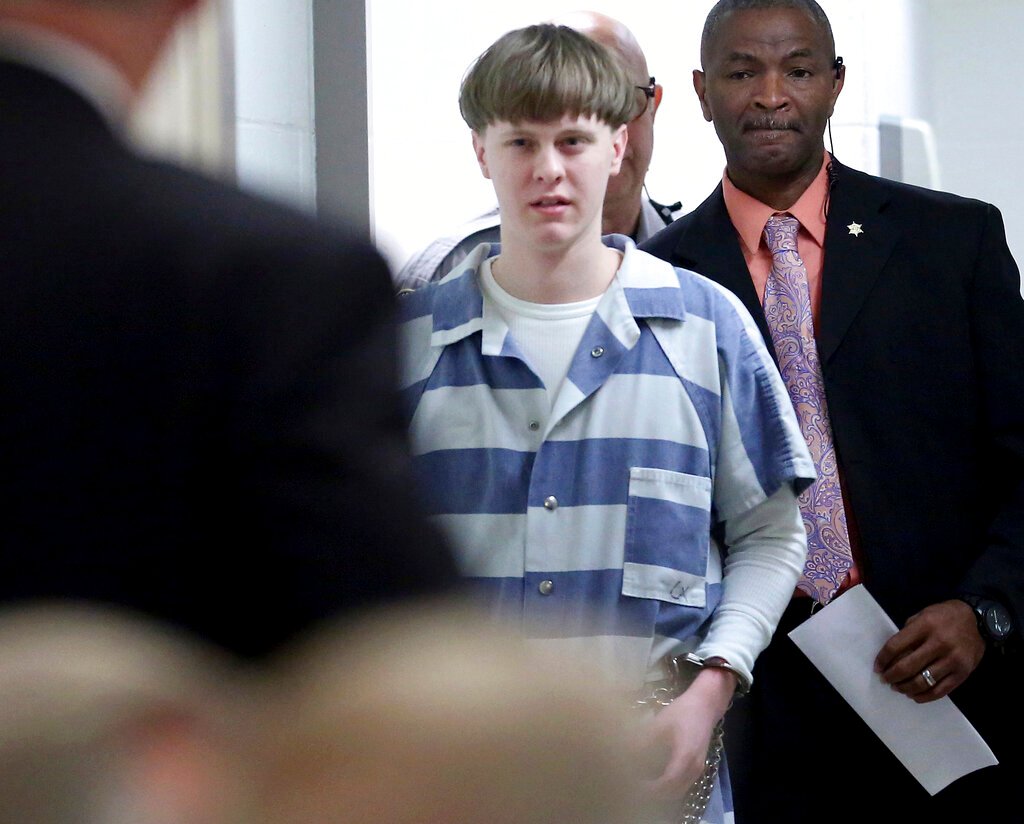
RICHMOND, Va. (AP) – A federal appeals court Wednesday upheld Dylann Roof’s conviction and death sentence for the 2015 racist slayings of nine members of a Black South Carolina congregation, saying the legal record cannot even capture the “full horror” of what he did.
A unanimous three-judge panel of the 4th U.S. Circuit Court of Appeals in Richmond rejected arguments that the young white man should have been ruled incompetent to stand trial in the shootings at Mother Emanuel AME Church in Charleston.
In 2017, Roof became the first person in the U.S. sentenced to death for a federal hate crime. Authorities have said Roof opened fire during the closing prayer of a Bible study at the church, raining down dozens of bullets on those assembled. He was 21 at the time.
In his appeal, Roof’s attorneys argued that he was wrongly allowed to represent himself during sentencing, a critical phase of his trial. Roof successfully prevented jurors from hearing evidence about his mental health, “under the delusion,” his attorneys argued, that “he would be rescued from prison by white-nationalists – but only, bizarrely, if he kept his mental-impairments out of the public record.”
Roof’s lawyers said his convictions and death sentence should be vacated or his case should be sent back to court for a “proper competency evaluation.”