
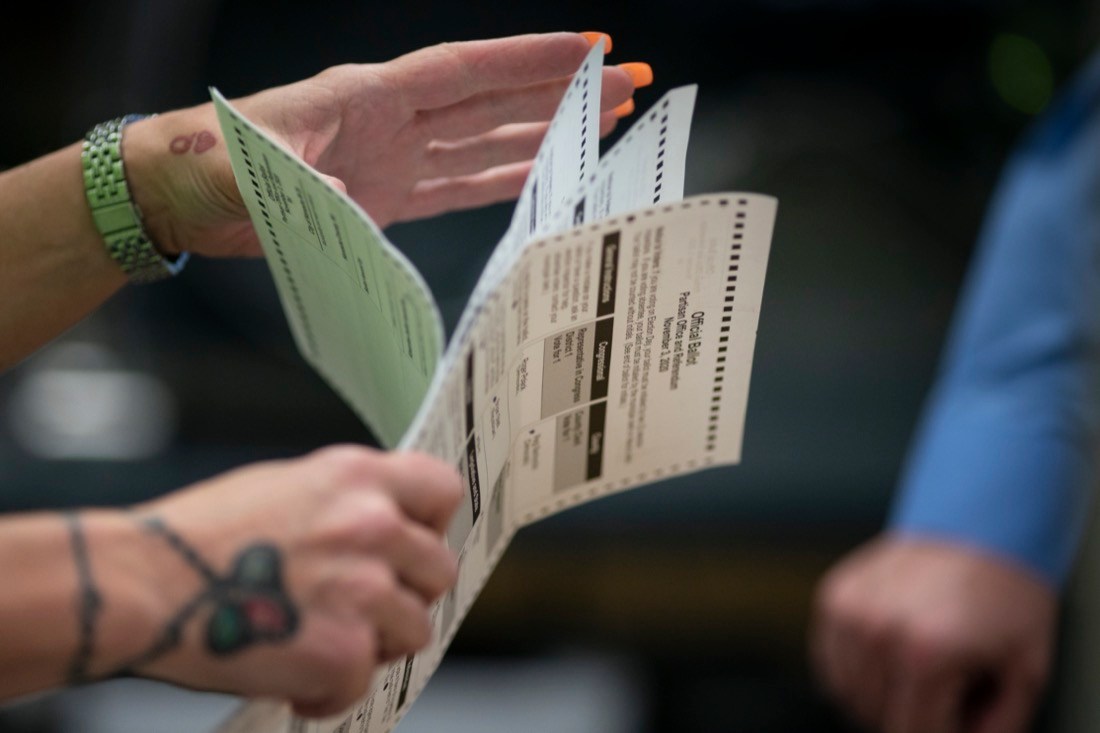
Congress provided hundreds of millions of dollars to shore up the nation’s election system against cyberattacks and other threats, but roughly two-thirds of the money remained unspent just weeks before last year’s presidential election.
A recently released federal report says the states, the District of Columbia and U.S. territories had spent a little more than $255 million of $805 million in election security grants through Sept. 30 of last year, the latest figures available.
States were given leeway on how and when to spend their shares because election concerns and potential vulnerabilities of voting systems vary widely across the country. Several election officials cited two main reasons for the slow pace of spending: More than half the money wasn’t allocated until the 2020 election was less than a year away, giving election officials and state lawmakers little time to make major spending decisions. And the coronavirus pandemic upended last year’s election planning, forcing officials to focus on safety at the polls and pivot to provide more early voting and mail-in balloting.
“Security was still on everybody’s mind, but it took a back seat to just making sure that the election ran without it just having a total meltdown,” said Don Palmer, chairman of the U.S. Election Assistance Commission, which issued the report.
A state-by-state snapshot the commission released last month shows that as of the end of the federal fiscal year on Sept. 30, when early voting was already happening in the presidential election, the nation’s 50 states plus the District of Columbia and five territories had spent roughly 31% of the election security funding. The grant money came in two chunks since 2018 under the Help America Vote Act.