
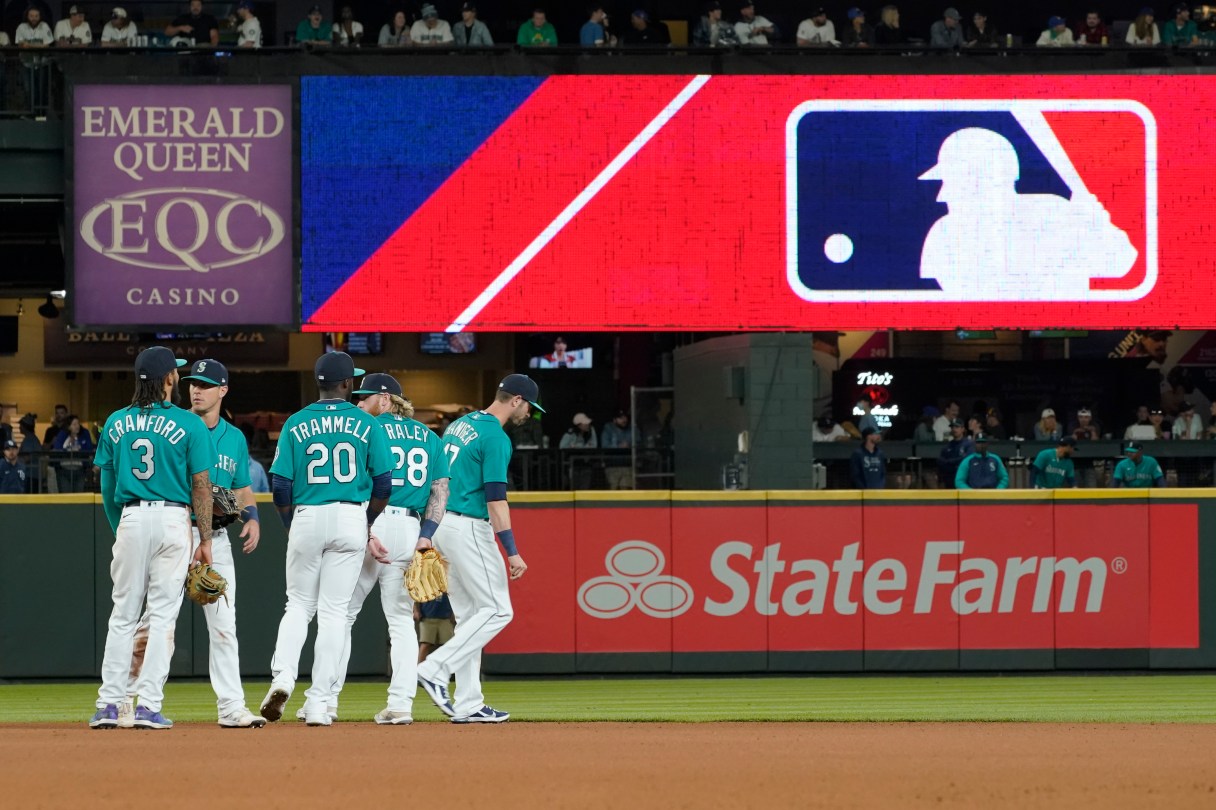
IRVING, Texas – Major League Baseball plunged into its first work stoppage in a quarter-century when the sport’s collective bargaining agreement expired Wednesday night and owners immediately locked out players in a move that threatens spring training and opening day next year.
The strategy, management’s equivalent of a strike under federal labor law, ended the sport’s labor peace after 9,740 days over 26 1/2 years.
Teams decided to force the long-anticipated confrontation during an offseason rather than risk players walking out during the summer, as they did in 1994. Players and owners had successfully reached four consecutive agreements without a work stoppage, but they have been accelerating toward a clash for more than two years.
“We believe that an offseason lockout is the best mechanism to protect the 2022 season,” MLB commissioner Rob Manfred wrote in a letter to fans. “We hope that the lockout will jumpstart the negotiations and get us to an agreement that will allow the season to start on time. This defensive lockout was necessary because the players’ association’s vision for Major League Baseball would threaten the ability of most teams to be competitive.”
Talks that started last spring ended Wednesday after a brief session of mere minutes with the sides far apart on the dozens of key economic issues. Management’s negotiators left the union’s hotel about nine hours before the deal lapsed at 11:59 p.m. EST, and players said MLB did not make any new central economic proposals this week.