
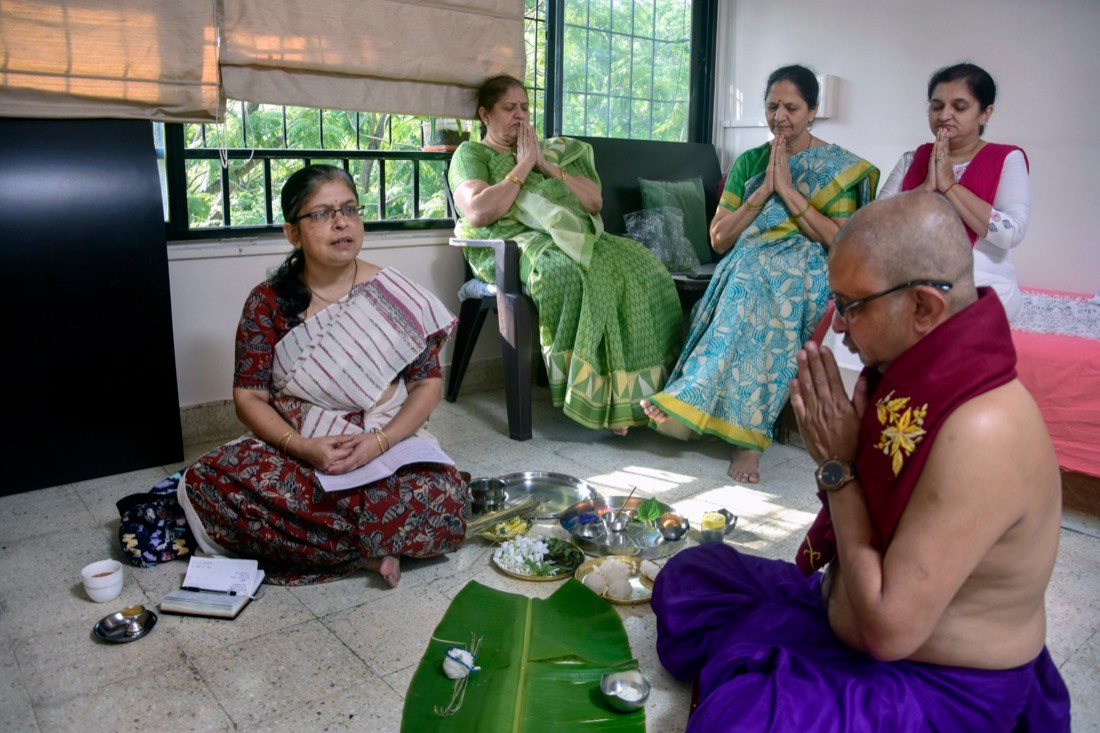
When Sushma Dwivedi started seriously thinking about performing wedding rites and other Hindu religious blessings in New York City and elsewhere, she knew who she needed to talk to – her grandmother.
Together, they went through the mantras that are recited by pandits, the priests who perform Hindu religious rituals, to find the ones that resonated with what Dwivedi was trying to do — offer Hindu blessings and services that were welcoming of all, irrespective of gender identity, sexual orientation, race, any of it.
Her grandmother isn’t a pandit – in India, as well as in Indian diaspora communities, that’s been a domain that is largely populated by men, with cultural mores at play. But she had a wealth of religious knowledge, of ritual, of proper pronunciation, to share with her granddaughter.
And that her grandmother played an integral role in Dwivedi’s understanding and practice of Hinduism reflects a larger religious reality. Those who study the religion and its traditions say that while there aren’t a lot of women priests (although that is changing in India and in other places), women in Hinduism globally continue to take on leadership roles in other ways – building communities, taking on positions in organizations, passing on knowledge.
“We just jammed together and sort of went through scriptures. … And in that sense, that’s the ‘old school’-est Hindu way on Earth, right? You pass it down,” Dwivedi said.