
Monday, November 16, 2026Nov 16

As COVID fueled the drug crisis, Native Americans hit worst

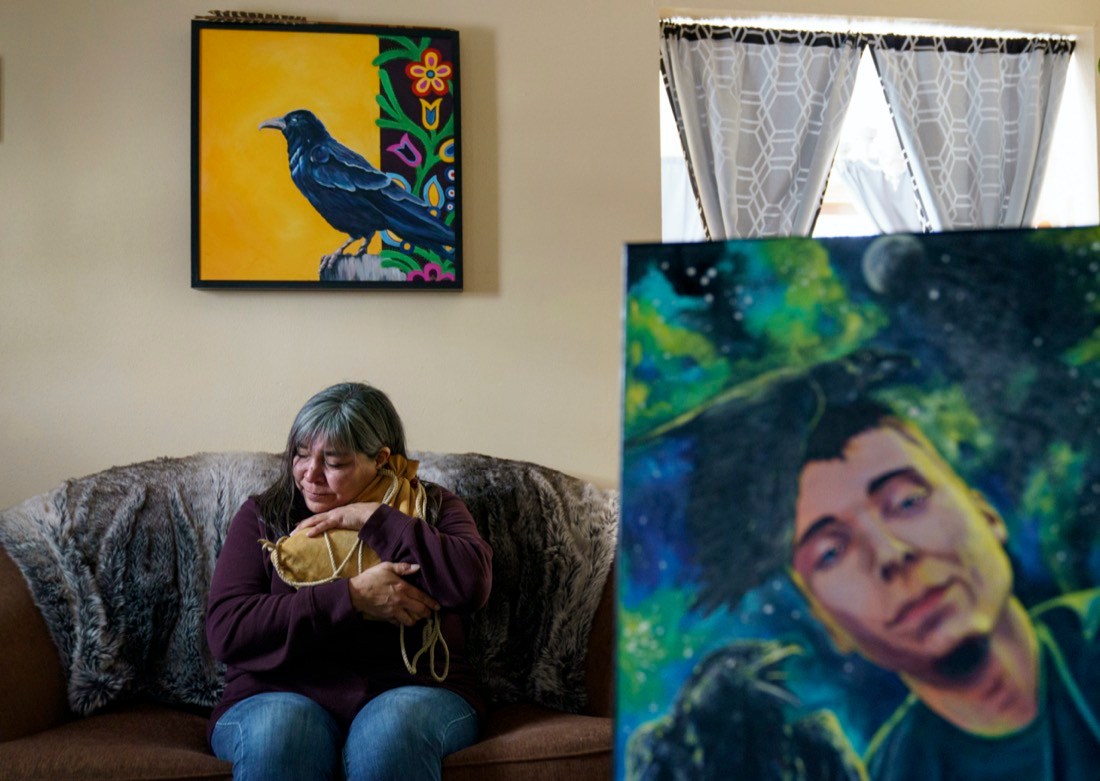
Rachel Taylor clutches a buckskin satchel filled with the ashes of her son, Kyle "Little Crow" Domrese, pictured at right, who died of an overdose, as she sits in the home they shared in Bemidji, Minn., Wednesday, Nov. 17, 2021. Just weeks remained until the anniversary of the day she opened his bedroom door and found her son face-down on his bed, one of more than 100,000 Americans lost in a year to overdoses as the COVID-19 pandemic aggravated America's addiction disaster. The death rate from drug overdoses for Native Americans has surpassed white people and is now the highest in the nation. (AP Photo/David Goldman)

BEMIDJI, Minn. (AP) – The medicine man told her she should soon give her son back to the earth.

Rachel Taylor kissed her fingertips and pressed them to the crow sewn onto a leather bag nestled on the couch in the living room. “Oh, my baby,” she whispered, and hugged the buckskin satchel filled with his ashes.

Nearly a year ago, she had opened his bedroom door and screamed so loud she woke the neighbor. Kyle Domrese was face down on his bed, one of more than 100,000 Americans lost in a year to overdoses as the COVID-19 pandemic fueled America’s addiction disaster.

When he was 4, the medicine man had given him his Ojibwe name: Aandegoons – “little crow.” She traced the outline of the black bird on the sack.

“Love you,” Taylor said to the bag, as she does each time she leaves for work in this city surrounded by three Ojibwe reservations in remote northern Minnesota.