
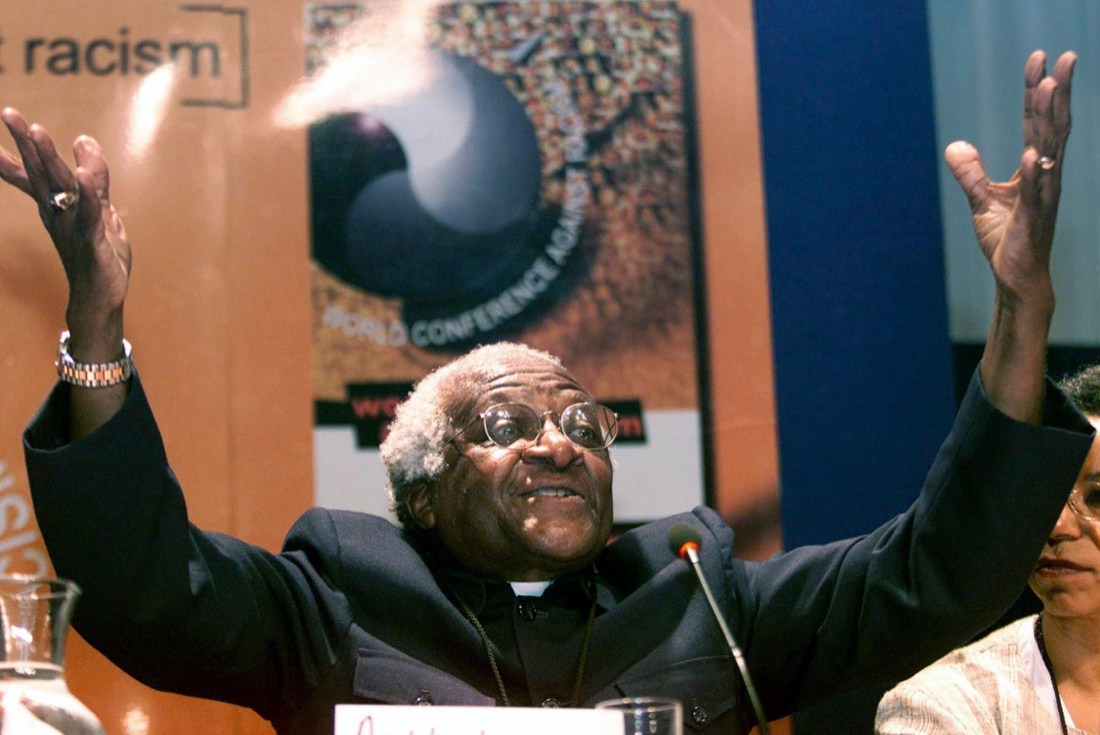
JOHANNESBURG (AP) – Desmond Tutu, South Africa’s Nobel Peace Prize-winning icon, an uncompromising foe of apartheid and a modern-day activist for racial justice and LGBT rights, died Sunday at 90. South Africans, world leaders and people around the globe mourned the death of the man viewed as the country’s moral conscience.
Tutu worked passionately, tirelessly and non-violently to tear down apartheid – South Africa’s brutal, decades-long regime of oppression against its Black majority that only ended in 1994.
The buoyant, blunt-spoken clergyman used his pulpit as the first Black bishop of Johannesburg and later as the Anglican Archbishop of Cape Town, as well as frequent public demonstrations, to galvanize public opinion against racial inequity, both at home and globally.
Nicknamed “the Arch,” the diminutive Tutu became a towering figure in his nation’s history, comparable to fellow Nobel laureate Nelson Mandela, a prisoner during white rule who became South Africa’s first Black president. Tutu and Mandela shared a commitment to building a better, more equal South Africa.
Upon becoming president in 1994, Mandela appointed Tutu to be chairman of the country’s Truth and Reconciliation Commission, which uncovered the abuses of apartheid.