
Thursday, October 29, 2026Oct 29

This story is free to read.

EXPLAINER: How Trump’s second impeachment trial will work

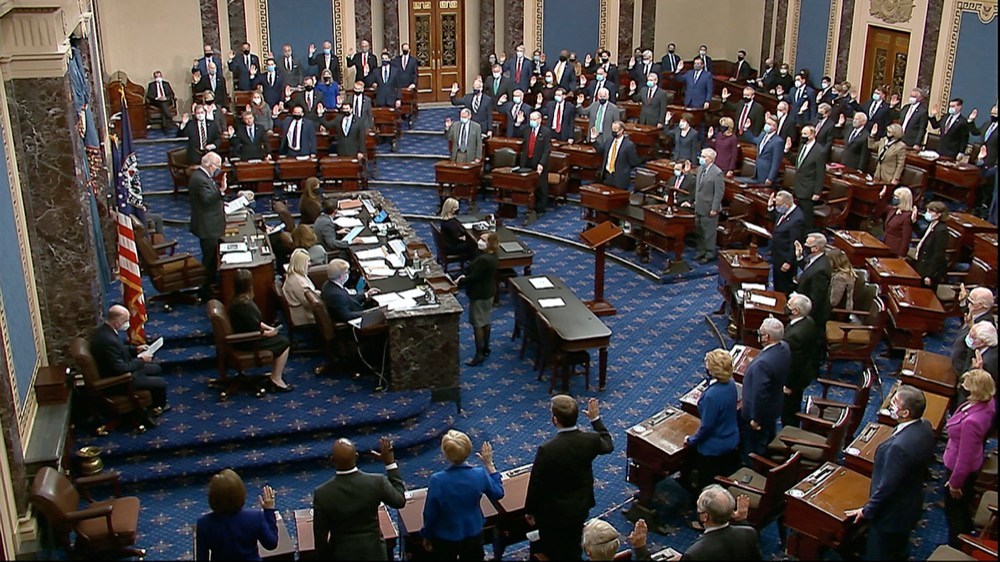
In this Jan. 26, 2021, image from video, Sen. Patrick Leahy, D-Vt., the president pro tempore of the Senate, who is presiding over the impeachment trial of former President Donald Trump, swears in members of the Senate for the impeachment trial at the U.S. Capitol in Washington. (Senate Television via AP)
In this Jan. 26, 2021, image from video, Sen. Patrick Leahy, D-Vt., the president pro tempore of the Senate, who is presiding over the impeachment trial of former President Donald Trump, swears in members of the Senate for the impeachment trial at the U.S. Capitol in Washington. (Senate Television via AP) In this Jan. 26, 2021, image from video, Sen. Patrick Leahy, D-Vt., the president pro tempore of the Senate, who is presiding over the impeachment trial of former President Donald Trump, swears in members of the Senate for the impeachment trial at the U.S. Capitol in Washington. (Senate Television via AP)

WASHINGTON (AP) – Former President Donald Trump’s historic second impeachment trial begins Tuesday, forcing the Senate to decide whether to convict him of incitement of insurrection after a violent mob of his supporters laid siege to the U.S. Capitol on Jan. 6.

While Trump’s acquittal is expected, all 100 senators will first have to sit at their desks and listen to hours of graphic testimony from House Democrats about the riots, which left five people dead. The House impeached Trump on Jan. 13, one week after the violence.

A look at the basics of the upcoming impeachment trial:

HOW DOES THE TRIAL WORK?

The Constitution says the House has the sole power of impeachment while the Senate has the sole power to try the individual on the charges. The person being impeached – who can be the president, the vice president or any civil officer of the United States – can be convicted by two-thirds of the senators present.