
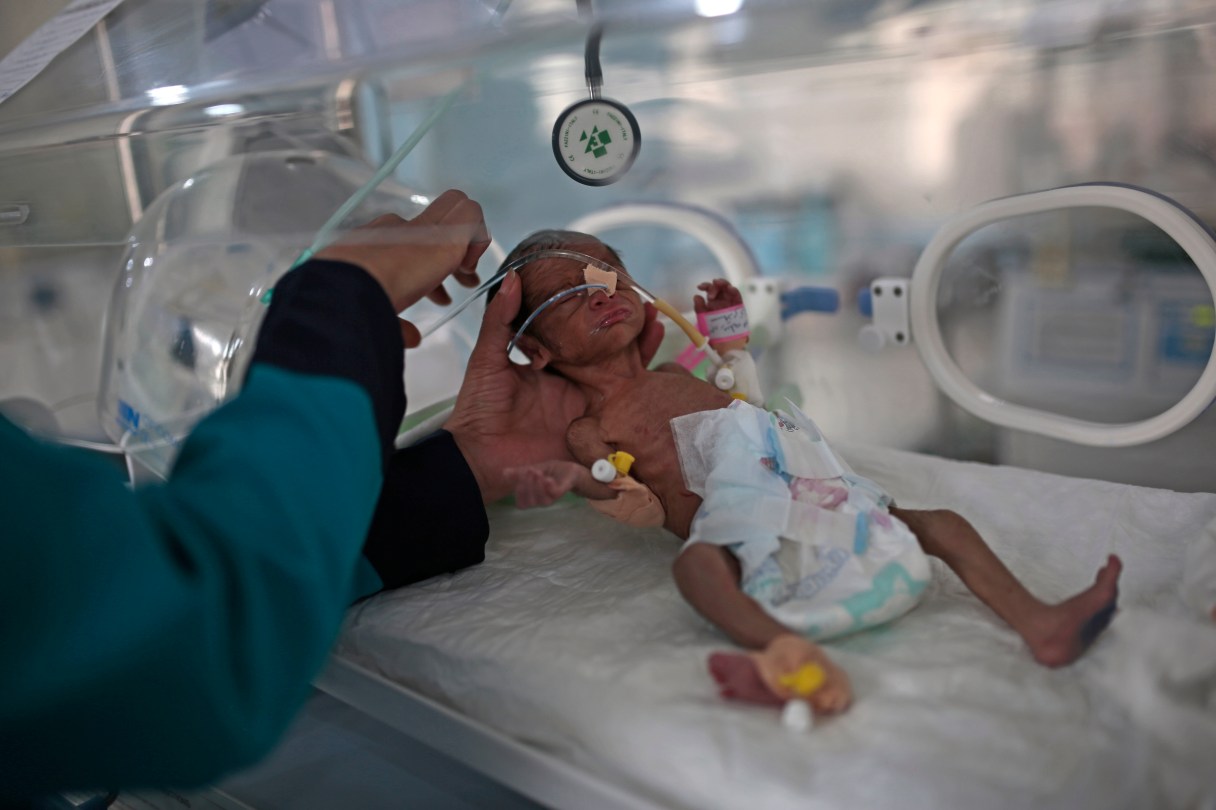
CAIRO (AP) – More than 2 million Yemeni children under the age of 5 are expected to endure acute malnutrition in 2021, four United Nations agencies said Friday, urging stakeholders to end the yearslong conflict that has brought the Arab world’s poorest country to the brink of famine.
The U.N. report warned that nearly one in six of those kids – 400,000 of the 2.3 million – are at risk of death due to severe acute malnutrition this year, a significant increase from last year’s estimates. The report also said a lack of funds was hampering humanitarian programs in Yemen, as donor nations have failed to make good on their commitments.
Compounding the crisis, around 1.2 million pregnant or breastfeeding women in Yemen are also projected to be acutely malnourished this year.
“These numbers are yet another cry for help from Yemen, where each malnourished child also means a family struggling to survive,” said David Beasley, executive director of the World Food Program, which jointly issued the report with the Food and Agriculture Organization, UNICEF and the World Health Organization.
“The crisis in Yemen is a toxic mix of conflict, economic collapse and a severe shortage of funding,” Beasley explained. In 2020, humanitarian programs in Yemen received only $1.9 billion of the required $3.4 billion, the report said.