
Friday, October 30, 2026Oct 30

This story is free to read.

McManus: How will the refusal of GOP senators to convict Trump look to future voters?

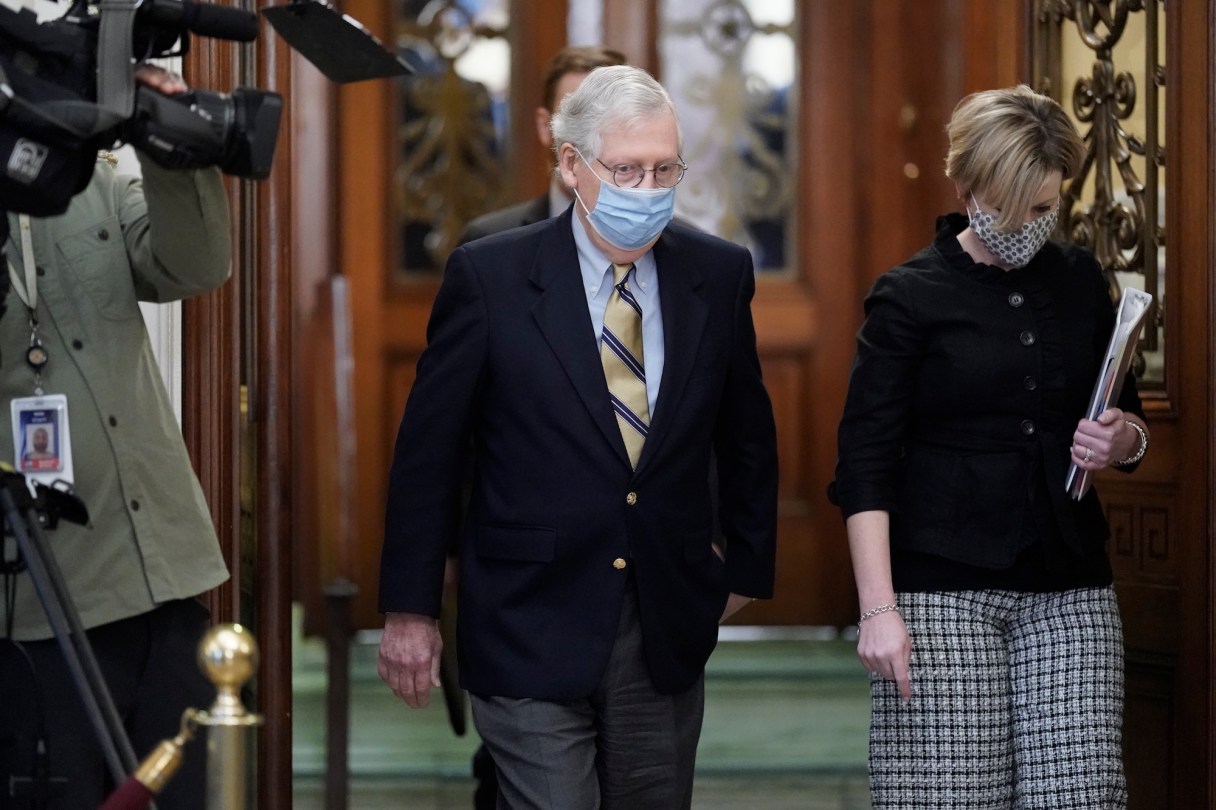
Photo by J. Scott Applewhite of The Associated Press / Senate Minority Leader Mitch McConnell of Kentucky walks in the Capitol as the Senate convenes in a rare weekend session for final arguments in the second impeachment trial of former President Donald Trump at the Capitol in Washington on Saturday, Feb. 13, 2021.
Photo by J. Scott Applewhite of The Associated Press / Senate Minority Leader Mitch McConnell of Kentucky walks in the Capitol as the Senate convenes in a rare weekend session for final arguments in the second impeachment trial of former President Donald Trump at the Capitol in Washington on Saturday, Feb. 13, 2021. Photo by J. Scott Applewhite of The Associated Press / Senate Minority Leader Mitch McConnell of Kentucky walks in the Capitol as the Senate convenes in a rare weekend session for final arguments in the second impeachment trial of former President Donald Trump at the Capitol in Washington on Saturday, Feb. 13, 2021.

It always seemed unlikely that Sen. Mitch McConnell of Kentucky, the Senate Republican leader, would vote to convict the disgraced ex-president who holds sway over most of his party.

But the justification McConnell offered when announcing his vote for acquittal Saturday was an act of political cynicism and a weaselly evasion of the main issue the Senate was asked to decide: whether Donald Trump bears responsibility for the sacking of the Capitol on Jan. 6.

McConnell has already said what he thinks about the facts: Trump is guilty of incitement, at least under a common-sense definition of the word.

For the usually sphinx-like McConnell, that was a moment of stunning clarity – as close to an act of courage as we’ve seen lately in a party whose members are alternately enthralled or terrified by Trump.

But McConnell then retreated, voting to spare Trump from being held accountable – not because he is innocent, but on narrow procedural grounds.