
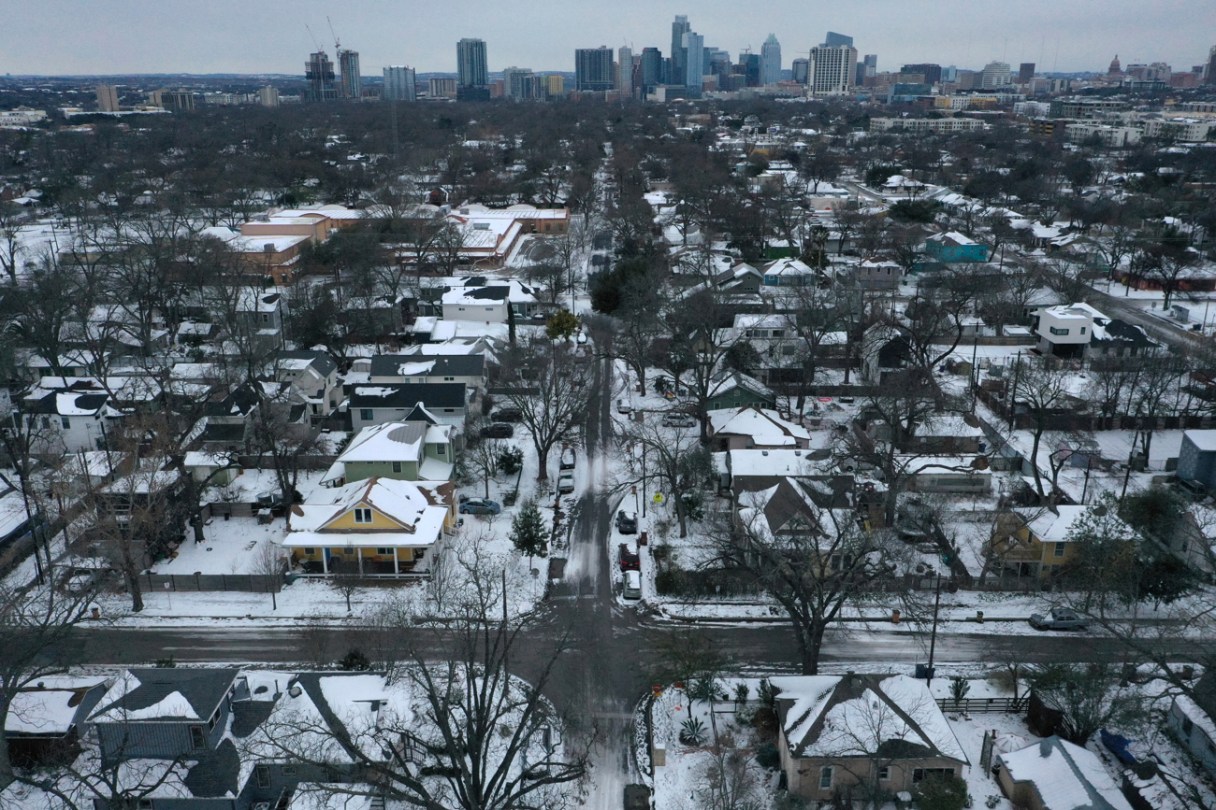
DALLAS (AP) – The power outages tormenting Texas in uncharacteristically Arctic temperatures are exposing weaknesses in an electricity system designed when the weather’s seasonal shifts were more consistent and predictable – conditions that most experts believe no longer exist.
This isn’t just happening in Texas, of course. Utilities from Minnesota to Mississippi have imposed rolling blackouts to ease the strain on electrical grids buckling under high demand during the past few days. And power outages have become a rite of summer and autumn in California, partly to reduce the chances of deadly wildfires.
But the fact more than 3 million bone-chilled Texans have lost their electricity in a state that takes pride in its energy independence underscores the gravity of a problem that is occurring in the U.S. with increasing frequency.
WHAT HAPPENED IN TEXAS?
Plunging temperatures caused Texans to turn up their heaters, including many inefficient electric ones. Demand spiked to levels normally seen only on the hottest summer days, when millions of air conditioners run at full tilt.