
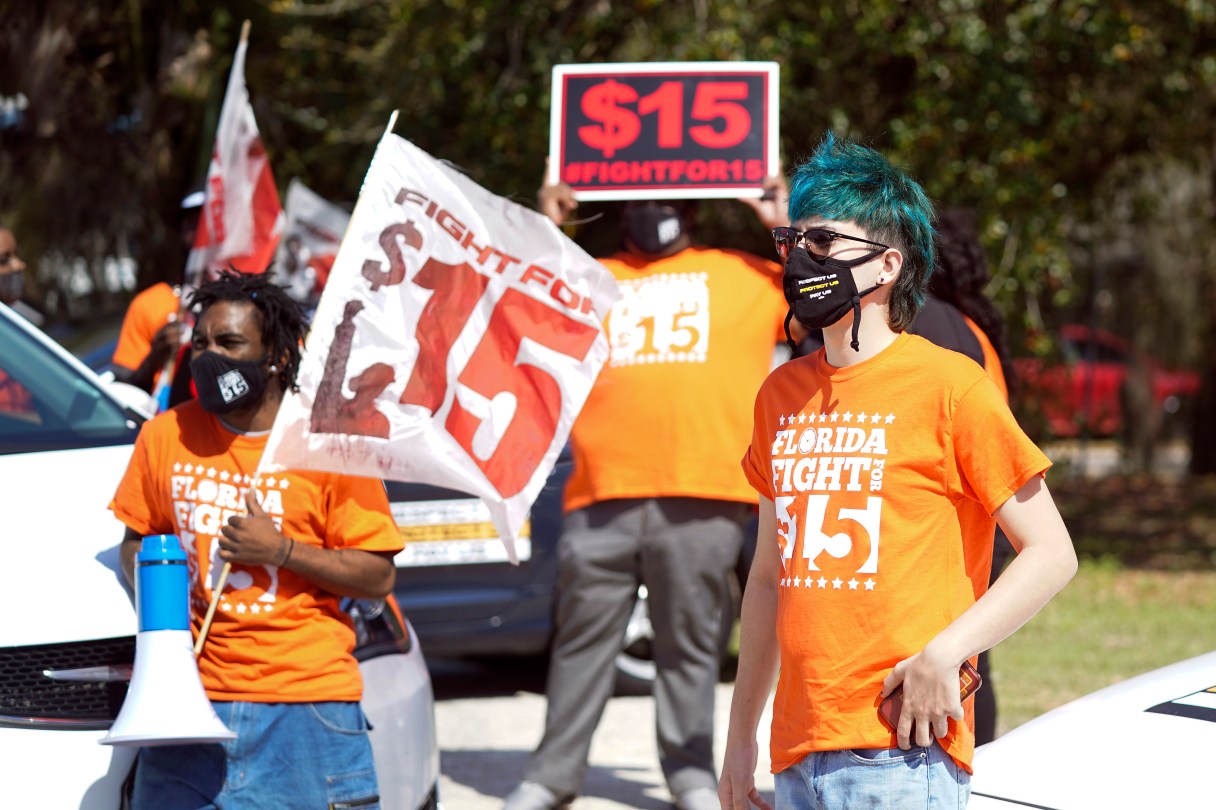

It appears the battle for a gradual $15 minimum wage will determine the degree of Democratic desperation.
Democrats were dealt a severe blow Thursday when nonpartisan Senate parliamentarian Elizabeth McDonough said the minimum wage tenet of the party’s $1.9 trillion COVID-19 relief bill could not be included if the body attempts to pass the bill through the reconciliation process.
That process would allow the Senate to pass the bill with only 51 votes (48 Democrats, two independents who vote with Democrats and Vice President Kamala Harris), but rules say all provisions of the legislation must be related to the budget and not just tangentially.
McDonough’s decision affirmed what is known as the Byrd rule.
Democrats are pondering their next moves.