
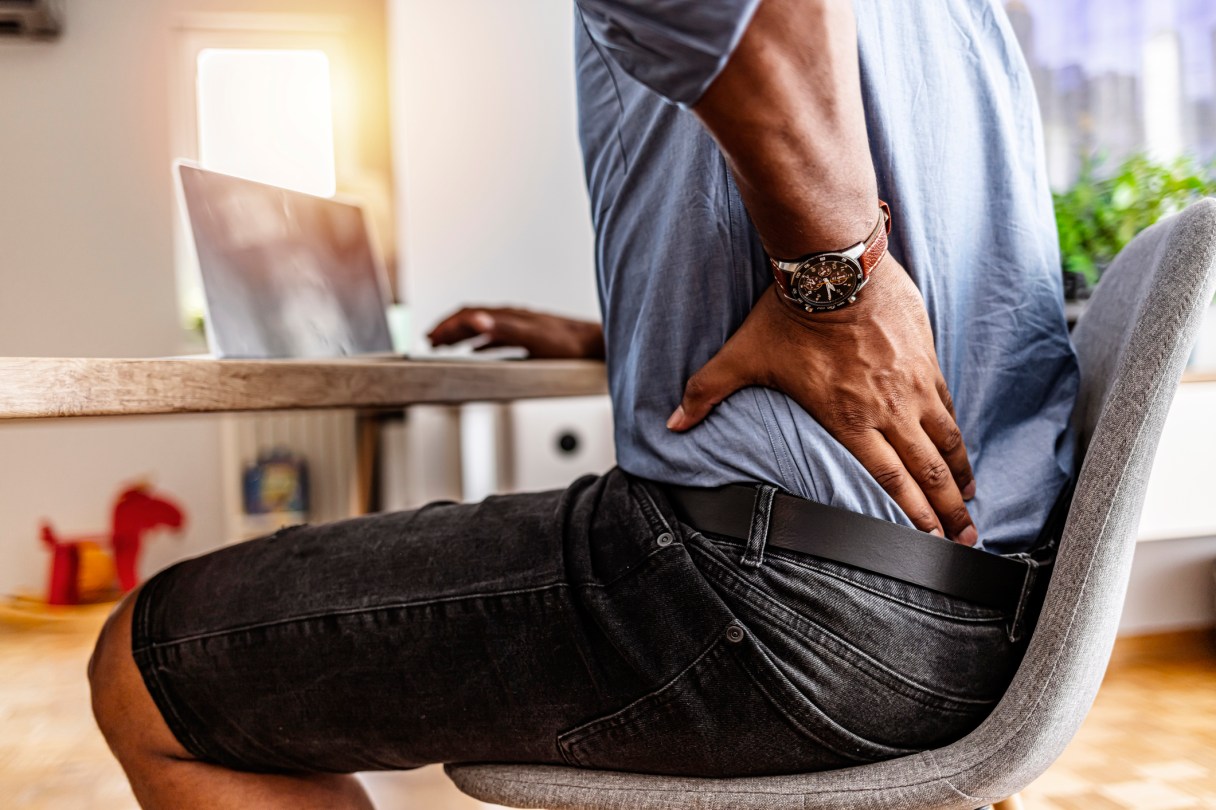
Q: What could be causing my lower back pain?
A: I have been in the pain management field more than 20 years now as a doctor of osteopathic medicine, and I still get that question asked of me every day. The answer is simple really. It all comes down to two things: poor nutrition and lack of exercise.
Modernized society has evolved in such a way that the typical habits of homeostatic maintenance – how our bodies function – have become maladjusted. This allows an uninhibited inflammatory response to break down the body tissues slowly and gradually to the point of no return when we do sustain an injury.
The first cause in the failure for the body to heal after an injury is poor nutrition, stemming from poor dietary habit choices. There are too many foods and or ingredients to name that negatively affect the body as we consume them, causing inflammation and restricting the autoregulation of the immune system.
The inflammatory system is an unbelievably valuable friend to us. It is our guardian during an infection, and it also serves as the repair team when we have tissue injury. However, if the inflammatory system does not receive the shutoff signal at the right time of the rescue cycle, it leads to destruction of the same tissues that it started out repairing. The joint ligaments, cartilage, nervous tissue, bone, even heart and lungs are negatively affected by unrestricted inflammatory activity. The foods we eat are significantly responsible for this problem. It is critical that we return to a more natural diet of less-refined foods, and it’s important to consume foods rich in antioxidants.
The second major cause of low back pain is the lack of physical fitness and the resiliency of the musculoskeletal system. Again, the modern evolution of society has not provided us with the best environment to build strong, healthy, resilient bodies. Some patients might tell me that they “work a physical job.” Their thinking is that the physical demands of such jobs, which tend to tear down the body, mean they don’t need to exercise. That is not quite the same.
Here’s why: Many have physically demanding industrial jobs, but those jobs don’t require the same muscles that physical labor did many years ago. For instance, heavy-equipment operators ride in large trucks and dozers; the shock to the spine vertically is nothing that is natural.
We also have jobs in factories, and even grocery stores, where employees might spend eight hours a day on concrete in the same position or repeating the same motion several thousand times per day. It’s the same with retail sales work and administrative desk work, requiring constant moving and standing with little routine muscular exertion. Those modern physical activities do not require the same muscular use and stabilization patterns – required thousands of years ago.
To save our backs, we need to focus on our “core” strength, flexibility and coordination of our spinal joints. We need to find the balance in our current lifestyle of physical requirements and the activities that make our anatomy more resilient. Yoga, tai chi, stretching and multi-muscle group coordination is more appropriate for our modern age.
So bottom line: Eat healthier, and exercise more regularly.
Maurice R. Bernaiche, D.O., is a physician at the Center for Spine & Pain Medicine and a member of the Chattanooga-Hamilton County Medical Society.
 Contributed photo / Dr. Maurie Bernaiche