
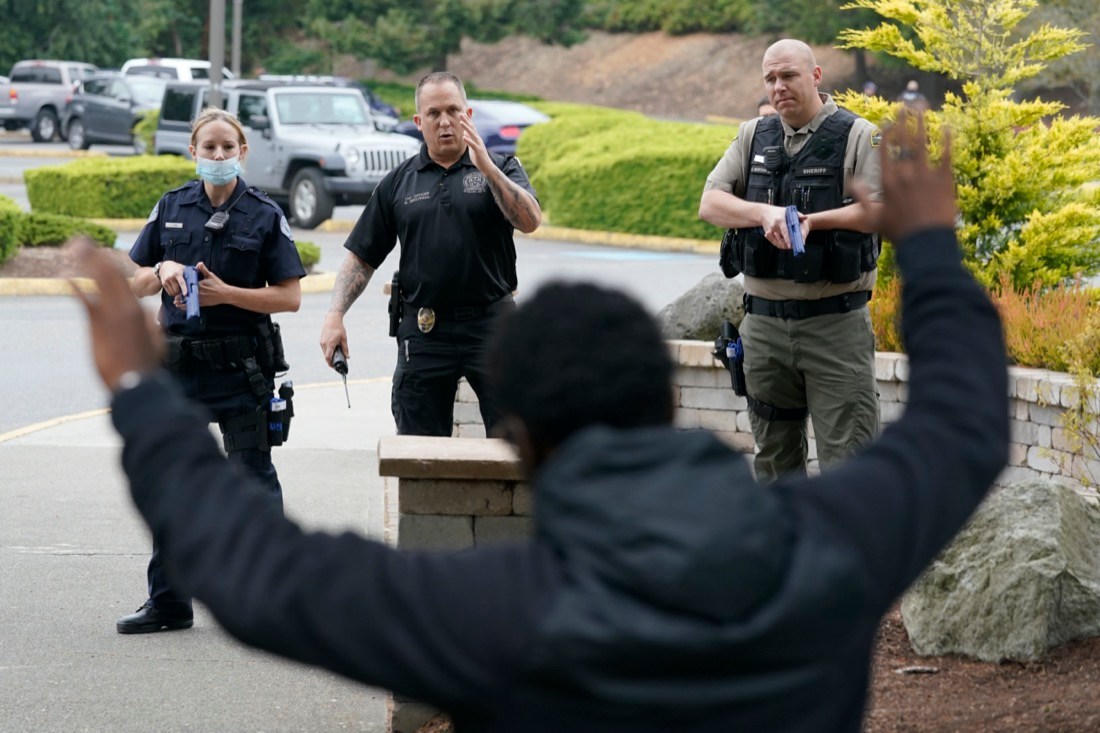
SEATTLE (AP) – Washington state is embarking on a massive experiment in police reform and accountability following the racial justice protests that erupted after George Floyd’s murder last year, with nearly a dozen laws taking effect Sunday.
But two months after Gov. Jay Inslee signed the bills, law enforcement officials remain uncertain about what they require, leading to discrepancies around the state in how officers might respond – or not respond – to certain situations, including active crime scenes and mental health crises.
“When you take the legislation and apply it, that’s when you really learn how effective it’s going to be,” said Rafael Padilla, the police chief in Kent, a south Seattle suburb. “The challenge is – I’m going to be very frank – the laws were written very poorly, and the combination of them all at the same time has led to there being conflicts in clarity and in what was intended versus what was written.”
The laws, passed by a Legislature controlled by Democrats and signed by a Democratic governor, constitute what is likely the nation’s most ambitious police reform legislation. They cover virtually all aspects of policing, including the background checks officers undergo before they’re hired; when they are authorized to use force and how they collect data about it; and the establishment of an entirely new state agency to review police use of deadly force.
Supporters said they would create the nation’s strongest police accountability and help undo racial inequity in the justice system – “a mandate from the people to stop cops from violating our rights and killing people,” said Sakara Remmu, of the Washington Black Lives Matter Alliance. According to the advocacy group Moms Demand Action, police have killed 260 people in Washington state since 2013. Disproportionately, they were Black – including Manuel Ellis, whose death in Tacoma last year led to murder or manslaughter charges against three officers and spurred some of the legislation.