
WASHINGTON (AP) – Wages and salaries rose at a healthy pace in the three months ended in June as employers competed to find enough workers to fill millions of available jobs.
Pay increased 1% in the second quarter for workers in the private sector, the Labor Department said Friday. That’s down slightly from 1.1% in the first three months of the year but still the second-highest reading in more than a decade.
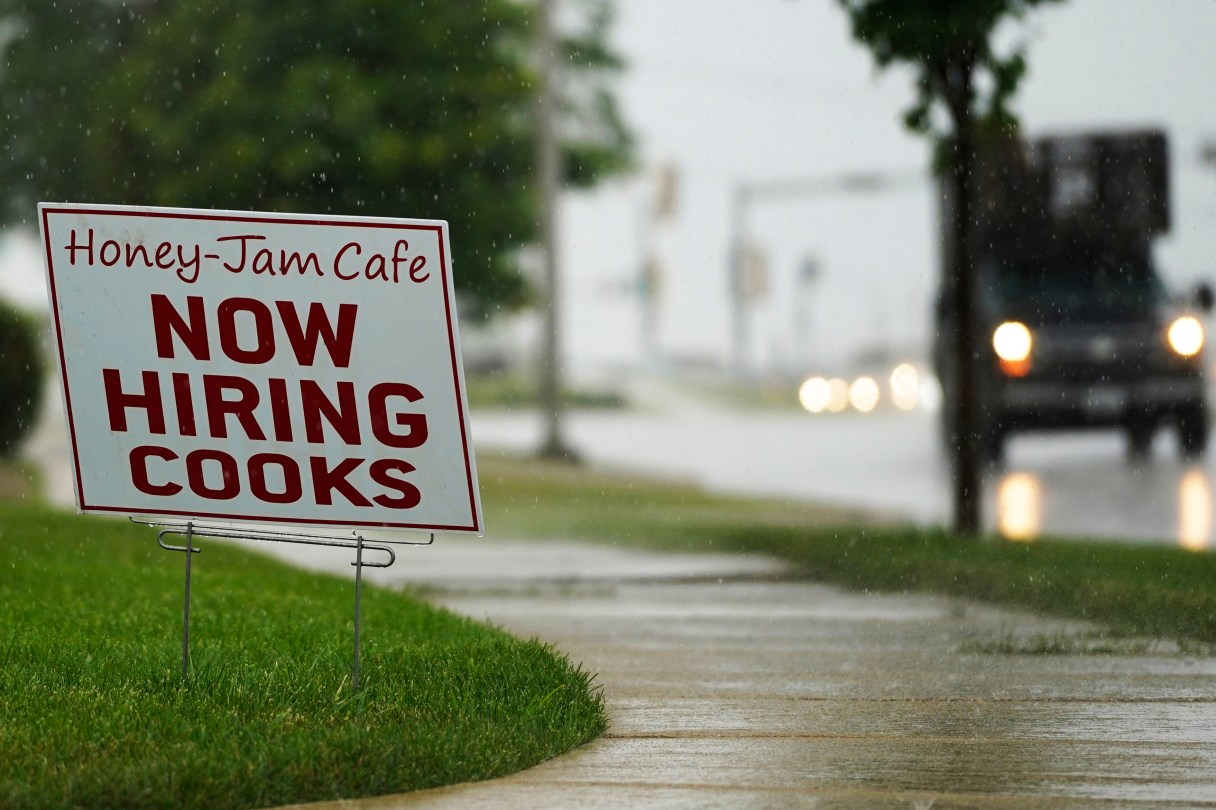
In the year ending in June, wages and salaries jumped 3.5% for workers in the private sector, the largest increase in more than 14 years. That increase was driven by sharp rise in pay for restaurant and hotel workers of more than 6%.
Total compensation for all employees rose at a slower pace, increasing just 0.7% in the second quarter and 2.9% in the past year. That figure was held back by weaker wage growth in state and local governments, and an unexpected slowing in the growth of benefits, such as health care. Benefits provided by companies rose just 0.3% in the second quarter, down from 0.6% in the first.
Friday’s data comes from the Labor Department’s Employment Cost Index, which measures pay changes for workers that keep their jobs. Unlike some other measures of Americans’ paychecks, it isn’t directly affected by mass layoffs such as the pandemic job losses that occurred in the spring of 2020.