
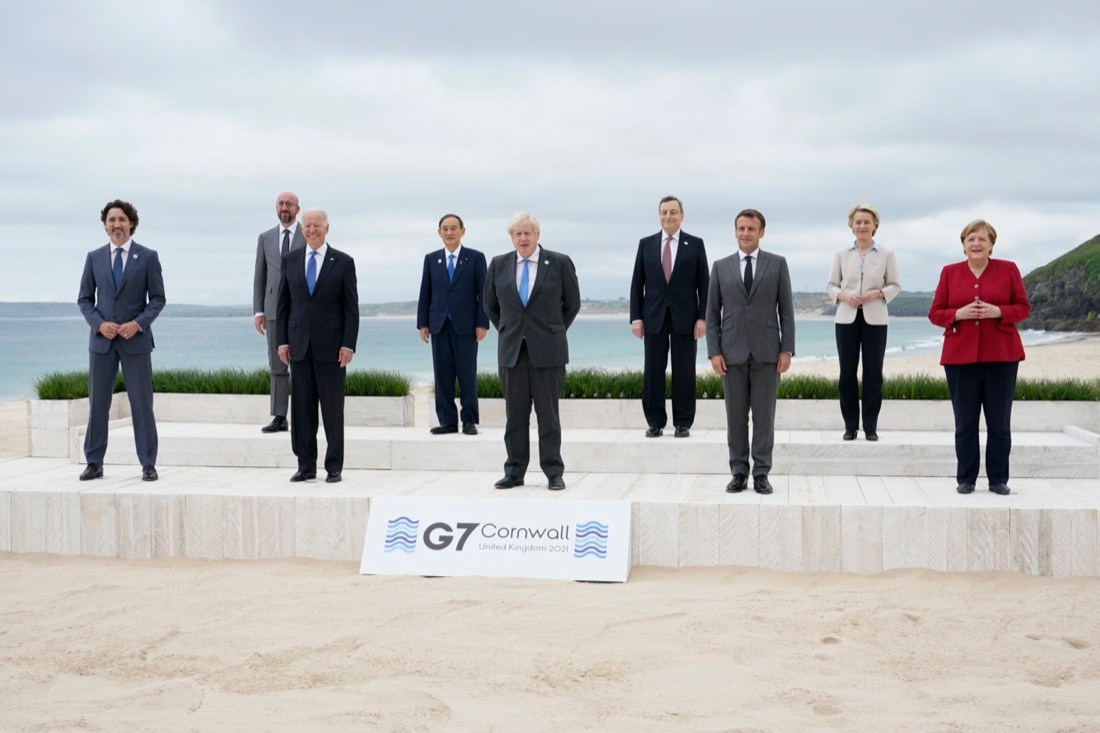
CARBIS BAY, England (AP) – The leaders of the world’s richest countries have pledged more than 1 billion coronavirus vaccine doses to poorer nations, endorsed a global minimum tax on multinational corporations and agreed they will work together to challenge China’s “non-market economic practices” and to call on Beijing to respect human rights in Xinjiang and Hong Kong.
Speaking at the end of a G-7 leaders’ summit in southwest England on Sunday, British Prime Minister Boris Johnson said the promised vaccine doses would come both directly and through the international COVAX program. The commitment falls far short of the 11 billion doses the World Health Organization said is needed to vaccinate at least 70% of the world’s population and truly end the pandemic.
The decision to support a minimum corporate tax had been widely anticipated after finance ministers earlier this month embraced placing a global tax of at least 15% on large multinational companies to stop corporations from using tax havens to avoid taxes.
The minimum rate was championed by the United States and dovetails with the aim of President Joe Biden to focus the summit on ways the democracies can support a more fair global economy by working together.
Biden also wanted to persuade fellow democratic leaders to present a more unified front to compete economically with Beijing and strongly call out China’s “nonmarket policies and human rights abuses.”