
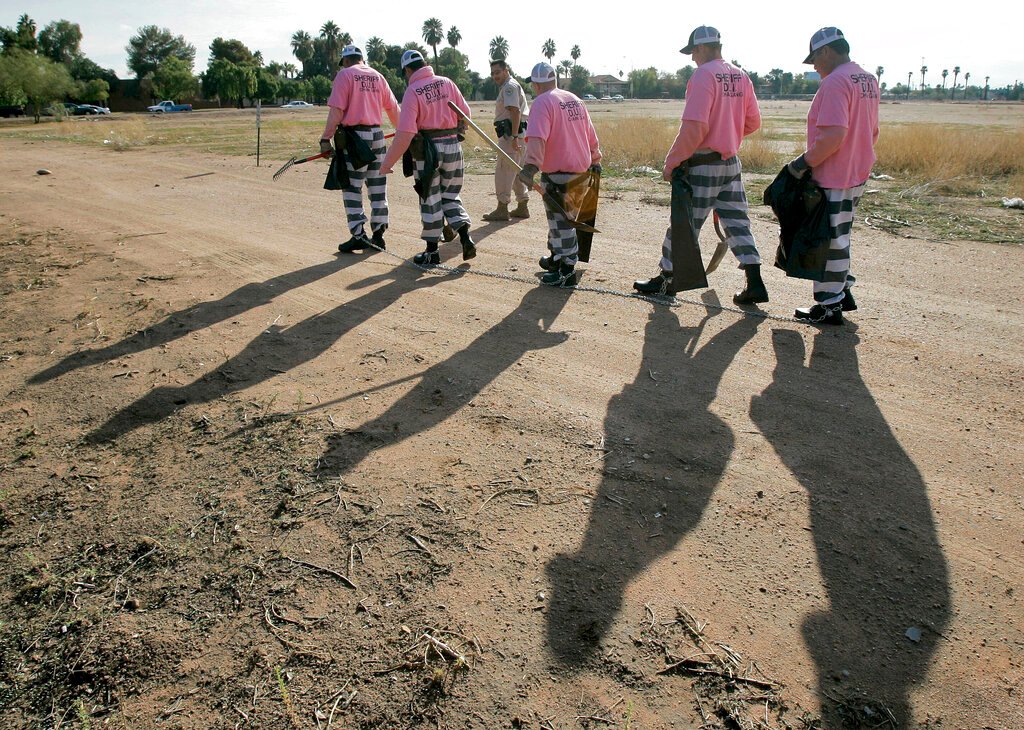
As the nation this week made Juneteenth a federal holiday, honoring the end of the enslavement of Black people, lawmakers are reviving calls to end a loophole in the Constitution that allowed another form of slavery – forced labor for those convicted of some crimes – to thrive.
Oregon Sen. Jeff Merkley and Georgia Rep. Nikema Williams reintroduced legislation Thursday to revise the 13th Amendment, which bans enslavement or involuntary servitude except as a form of criminal punishment. That exception, which has been recognized since 1865, has led to the common practice of forced prison labor.
Social justice advocates say it created generations of Black families touched by mass incarceration and poverty and that the ramifications are still being felt today. Juneteenth seemed like the appropriate time to address this “huge piece of systemic racism in the middle of our Constitution,” Merkley told The Associated Press.
“At the moment that we are celebrating, if you will, the 13th Amendment and the end of slavery and its eventual announcement … we should at the same time recognize that the 13th Amendment was flawed,” Merkley said. “It enabled states to arrest people for any reason, convict them and put them back into slavery.”
The amendment’s loophole for criminal punishment encouraged former Confederate states, after the Civil War, to devise ways to maintain the dynamics of slavery. They used restrictive measures known as the “black codes,” laws targeting Black people for benign interactions from talking too loudly to not yielding on the sidewalk. Those targeted would end up in custody for these minor actions, and would effectively be enslaved again.