
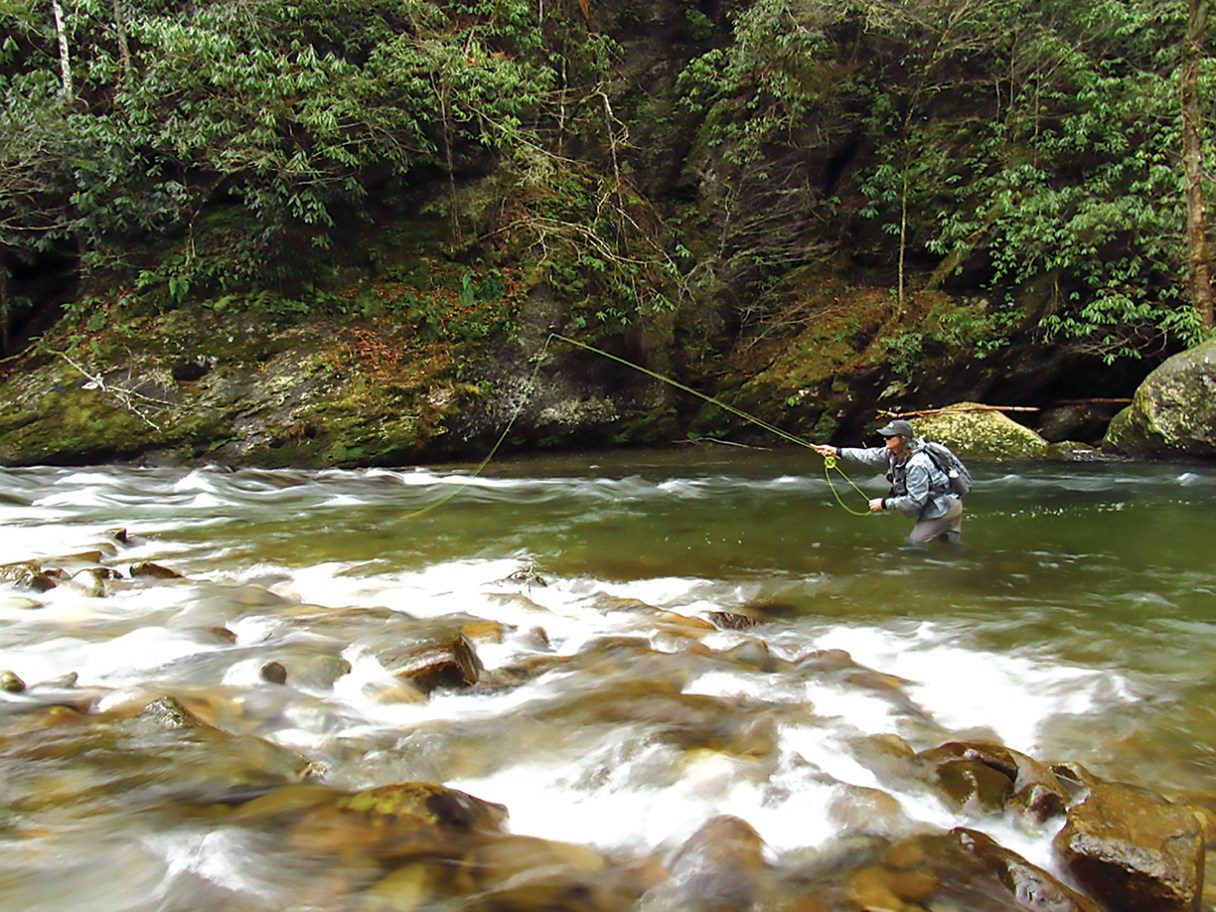
Fly fishing Great Smoky Mountains National Park is less about catching big fish and more about experiences and the places it takes you.
Just ask Ian Rutter. He and his wife, Charity, run R&R Fly Fishing out of Townsend, Tennessee. They’ve guided anglers in the park for a quarter century, and Ian’s voice still lights up when discussing opportunities for spring in the Smokies. He’s excited about fishing, and he’s also excited about getting into the park ahead of the busy tourist season.
Perhaps optimism is a side effect of living minutes away from some of the most gorgeous trout water in the country. There are more than 800 miles of wild trout streams within Great Smoky Mountains National Park. From roadside rivers to high-elevation rills holding native brook trout, there’s more water than you could explore in a lifetime.
In early spring, Ian suggests anglers stick to larger waters at lower elevations. In March, and even into April, it’s likely there will still be snow on the ground and ice on the edges of small streams up in the hills. Trout thrive in cold water, but their metabolisms slow, and they feed less readily in icy conditions. Also, the bugs they feed on are mostly dormant, which can make things kind of slow for fly fishing.
Meanwhile, down in the valleys, larger rivers like Little River, Deep Creek and the Oconaluftee will be waking up in March, and they’ll be fishing very well headed into the latter part of spring. In the afternoons, even on cold days, fish should be looking to the surface for hatches of mayflies like Quill Gordons, blue-winged olives and blue quills. Throw in a few early brown stoneflies, and you’ll see why the Smokies are known for great dry fly fishing.