
Friday, October 30, 2026Oct 30

This story is free to read.

Democratic voting bill would make biggest changes in decades

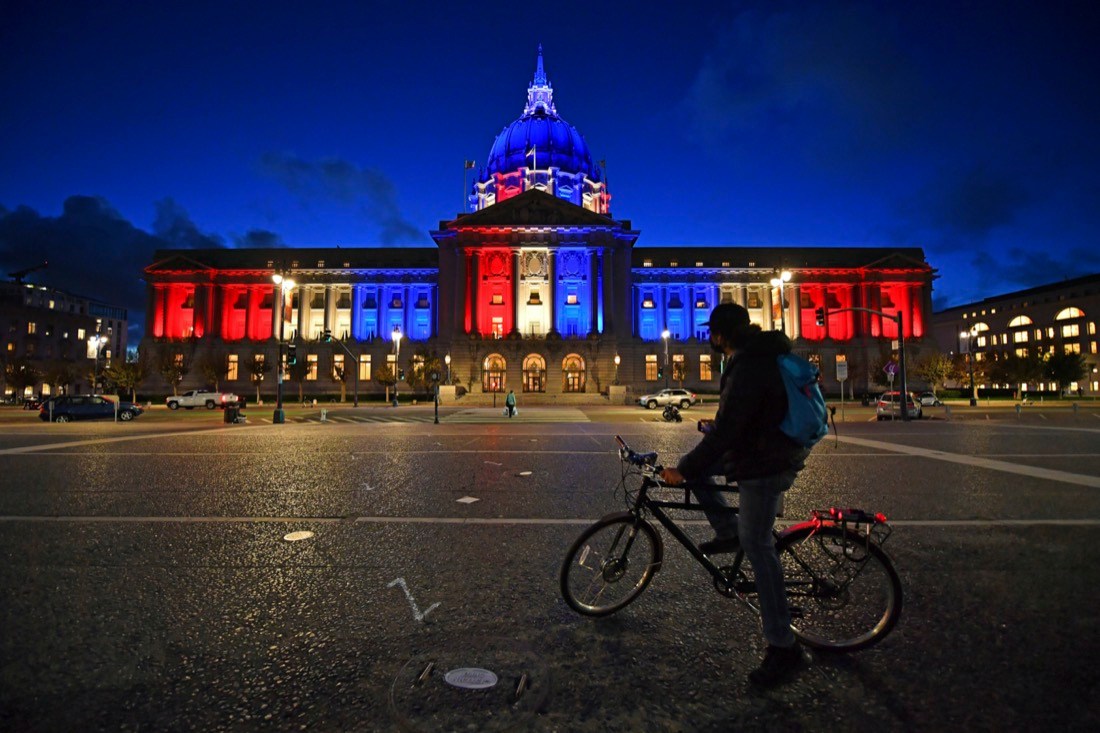
A bicyclist stops to admire the red, white and blue lights illuminating San Francisco City Hall in San Francisco, Calif., Friday, Nov. 6, 2020. Congress is beginning debate on the biggest overhaul of U.S. elections law in a generation. Legislation from Democrats would touch virtually every aspect of the electoral process — striking down hurdles to voting, curbing partisan gerrymandering and curtailing big money in politics. Republicans see those very measures as a threat that would limit the power of states to conduct elections and ultimately benefit Democrats. (Jose Carlos Fajardo/Bay Area News Group via AP, file)
A bicyclist stops to admire the red, white and blue lights illuminating San Francisco City Hall in San Francisco, Calif., Friday, Nov. 6, 2020. Congress is beginning debate on the biggest overhaul of U.S. elections law in a generation. Legislation from Democrats would touch virtually every aspect of the electoral process — striking down hurdles to voting, curbing partisan gerrymandering and curtailing big money in politics. Republicans see those very measures as a threat that would limit the power of states to conduct elections and ultimately benefit Democrats. (Jose Carlos Fajardo/Bay Area News Group via AP, file) A bicyclist stops to admire the red, white and blue lights illuminating San Francisco City Hall in San Francisco, Calif., Friday, Nov. 6, 2020. Congress is beginning debate on the biggest overhaul of U.S. elections law in a generation. Legislation from Democrats would touch virtually every aspect of the electoral process — striking down hurdles to voting, curbing partisan gerrymandering and curtailing big money in politics. Republicans see those very measures as a threat that would limit the power of states to conduct elections and ultimately benefit Democrats. (Jose Carlos Fajardo/Bay Area News Group via AP, file)

WASHINGTON (AP) – As Congress begins debate this week on sweeping voting and ethics legislation, Democrats and Republicans can agree on one thing: If signed into law, it would usher in the biggest overhaul of U.S. elections law in at least a generation.

House Resolution 1, Democrats’ 791-page bill, would touch virtually every aspect of the electoral process – striking down hurdles to voting erected in the name of election security, curbing partisan gerrymandering and curtailing the influence of big money in politics.

Republicans see those very measures as threats that would both limit the power of states to conduct elections and ultimately benefit Democrats, notably with higher turnout among minority voters.

The stakes are prodigious, with control of Congress and the fate of President Joe Biden’s legislative agenda in the balance. But at its core, a more foundational principle of American democracy is at play: access to the ballot.

“This goes above partisan interests. The vote is at the heart of our democratic system of government,” said Fred Wertheimer, president of the nonpartisan good government organization Democracy 21. “That’s the battleground. And everyone knows it.”