
Friday, November 13, 2026Nov 13

Selma Bridge Crossing Jubilee to honor civil rights icons

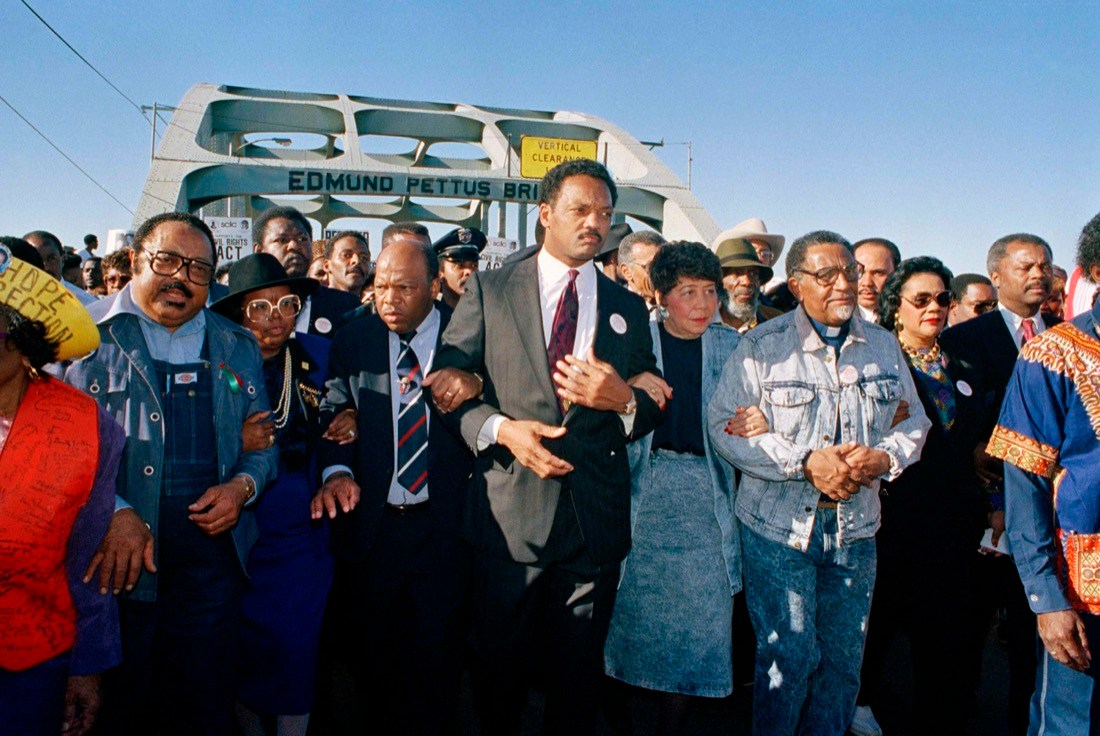
FILE - In this March 4, 1990, file photo, civil rights figures lead marchers across the Edmund Pettus Bridge during the recreation of the 1965 Selma to Montgomery march in Selma, Ala. From left are Hosea Williams of Atlanta, Georgia Congressman John Lewis, the Rev. Jesse Jackson, Evelyn Lowery, SCLC President Joseph Lowery and Coretta Scott King. This Sunday, March 7, 2021, marks the 56th anniversary of those marches and "Bloody Sunday," when more than 500 demonstrators gathered on March 7, 1965, to demand the right to vote and cross Selma's Edmund Pettus Bridge. They were met by dozens of state troopers and many were severely beaten. (AP Photo/Jamie Sturtevant, File)

DETROIT (AP) – Bernard Lafayette Jr. was a young activist emerging from the 1961 sit-ins and Freedom Rides that fought for Black civil rights and an end to racial segregation when he received his next assignment.

It was one that would help change the course of American history.

“I looked on the blackboard and they had an ‘X’ through Selma,” Lafayette, now 80, recalled in an interview with The Associated Press, referring to the Alabama city that would become emblematic of the fight to secure Black voting rights and the 1965 marches that were a turning point in that struggle.

The Student Nonviolent Coordinating Committee, the youth civil rights arm, had sent two teams to scout out the city.

“Both teams came back and said ‘No, we’re not going to Selma,'” Lafayette said. “And they gave the same reason: ‘The white folks were too mean and the Black folks were too scared.”’