
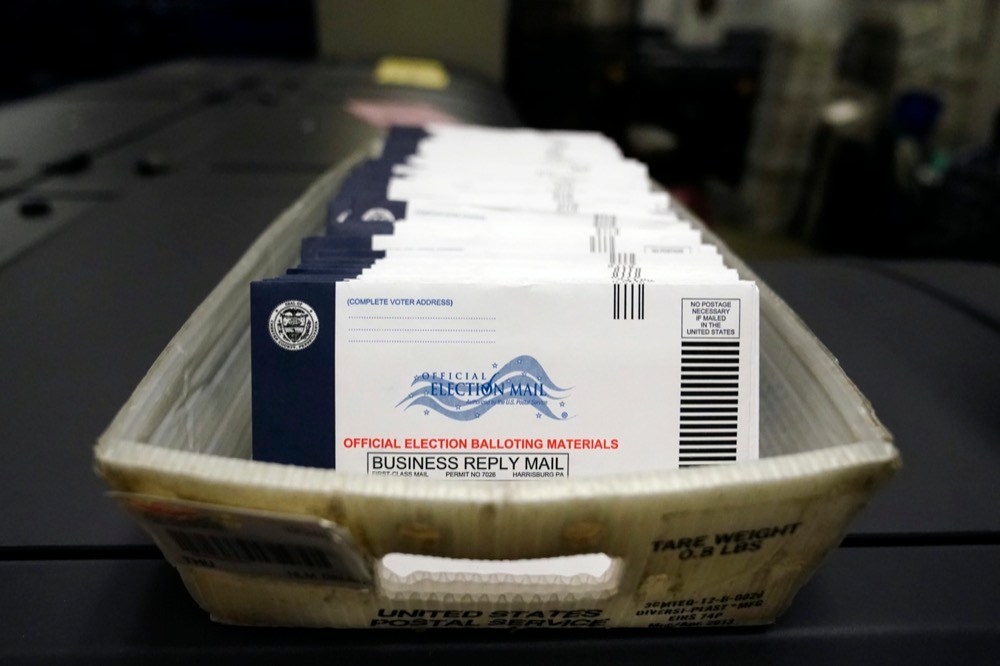
Donald Trump last year publicly worried that the explosion in voting by mail during the pandemic would increase turnout so much that “you’d never have a Republican elected in this country again.” But a new study shows the record rates of mail voting in 2020 didn’t help Democrats or lead to an increase in voting.
The research is only the latest in a years-long number of studies finding no partisan benefit to mail voting. But it also draws the conclusion that making it easier to vote did not increase voting levels because voters were already highly motivated to participate in the 2020 contest.
“We find a pretty precisely zero effect on turnout,” said Jesse Yoder, one of the study’s authors and a Ph.D. student in political science at Stanford University. “Voter interest was really driving turnout more than these convenience voting forms.”
The researchers proved this with a novel approach – examining turnout rates in Texas, which, unlike many states, did not ease its mail voting restrictions during the pandemic. Voters 65 and older could vote by mail automatically, while younger ones still had to provide a legally justified excuse.
The researchers compared the voting rates of 65-year-olds with automatic access to mail voting to those of 64-year-olds who lacked them. The two age groups voted at identical rates and there were only .2% more Democrats in the 65-year-old group than in the 64-year-old one, showing mail voting didn’t increase Democrats’ share of the vote.