
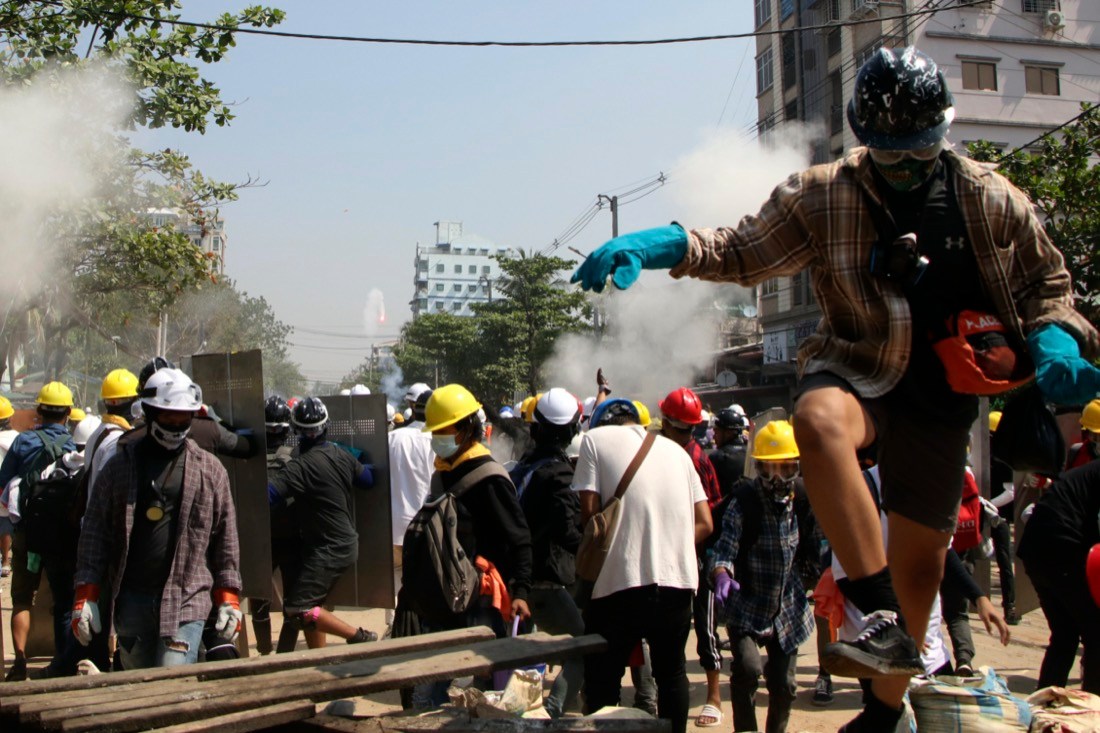
YANGON, Myanmar (AP) – Myanmar careened deeper into crisis, as police occupied hospitals and universities and reportedly arrested hundreds of people involved in protesting last month’s military seizure of power, while a coalition of labor unions called a strike for Monday.
Tension was high Sunday in the country’s biggest city, Yangon, where for a second night running gunshots from heavy weapons rang out randomly in the streets of several neighborhoods after the start of an 8 p.m. curfew. The sounds of what apparently were stun grenades could also be heard on videos posted on social media.
The purpose for security forces using such weapons when protesters had left the streets appeared to be part of a strategy to strike fear in anyone who might think about defying the authorities. In a similar vein, there were many filmed incidents of police and soldiers in plain view savagely beating protesters they had taken into custody.
Some of the shooting was heard near hospitals, where reports said neighborhood residents sought to block the entry of police and soldiers.
Security forces have often targeted medical personnel and facilities, attacking ambulances and their crews. Members of the medical profession launched the Civil Disobedience Movement, which is the nominal coordinator of the protests, frequently hailed on demonstrators’ signs by its CDM initials. Taking over hospitals would allow the authorities to easily arrest wounded people presumed to be protesters.