
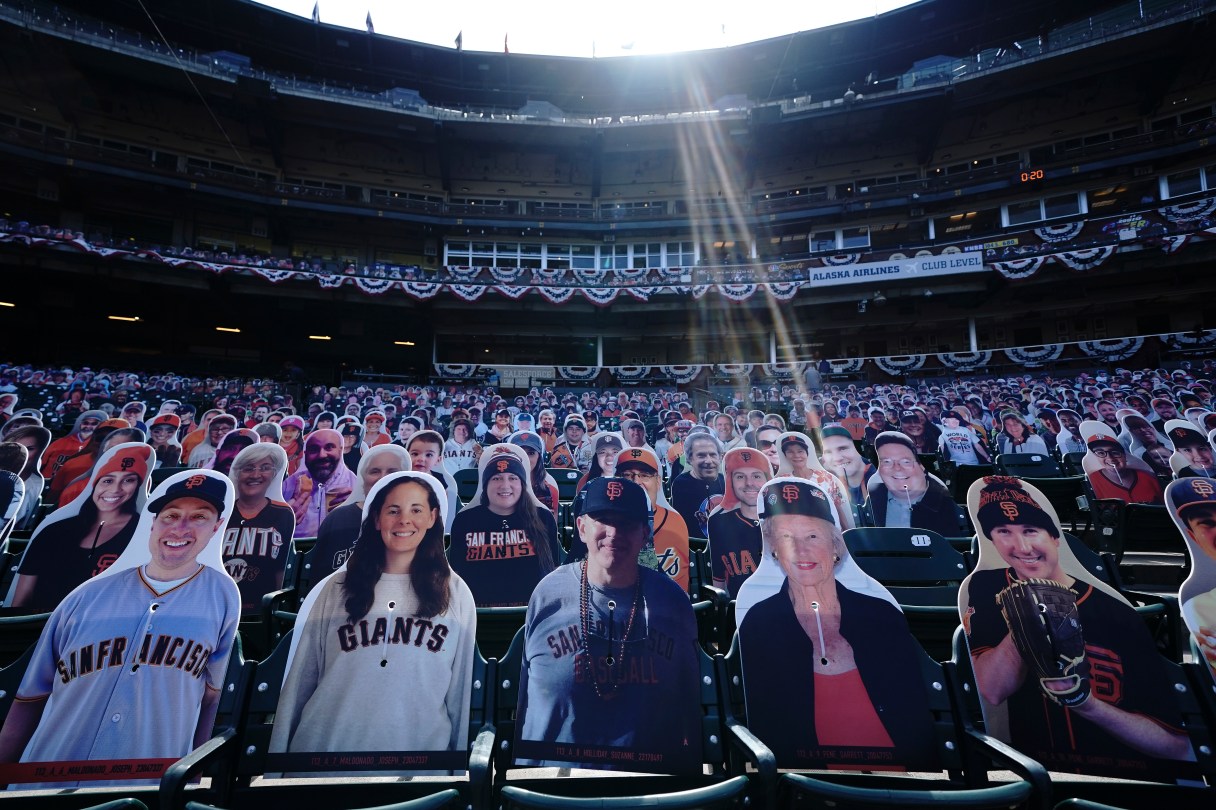
Sports amid the COVID-19 pandemic became a whole different sort of spectacle, especially when it came to spectators – often with zero, sometimes with some, and in at least one instance at a Grand Slam tennis tournament, starting a match with fans in the seats yet finishing it with none present.
Screams and chants, applause and dancing, cheering and jeering by tens of thousands in the stands were so customary and unremarkable at the various athletic endeavors in the before times that they tended to recede into the background as not much more than white noise.
Over the past year, though, thanks to the contagiousness and dangers of the coronavirus, such sights and sounds were replaced at cavernous venues by the echoes of a bouncing ball, the squeaks of sneakers or “Did he really say that?” chatter among players, coaches and officials that suddenly was audible.
And truly, the entire essence of sports as we know them changed in subtle, if fundamental, ways during the past 12 months because of restrictions on crowds. For those who were no longer able to enjoy being right there, of course – how many kids missed out on a chance to witness a game firsthand for the first time? – but also for those viewing from afar and even for the participants themselves.
If a contest happens without anyone delighting in the athleticism or praising and booing the athletes and the outcomes, does the whole undertaking matter as much? Decreased television ratings across the landscape, even for a juggernaut such as the Super Bowl, seemed to indicate not.