
Monday, November 16, 2026Nov 16

Tennessee wildlife agency says invasive zebra mussels in moss balls sold for aquariums

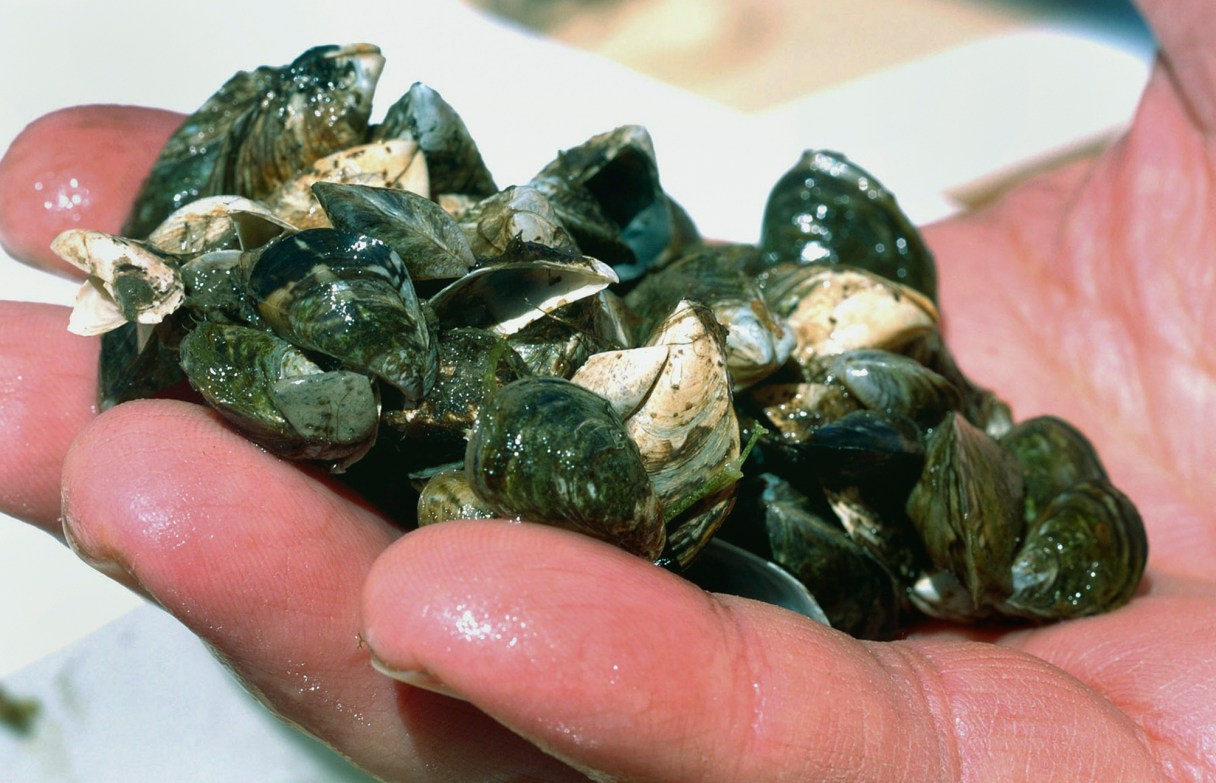
FILE - In this May 3, 2007 file photo, Inland Seas Education Association instructor Conrad Heins holds a cluster of zebra mussels that were taken from Lake Michigan off Suttons Bay, Mich. A federal appeals court on Monday, Oct. 5, 2015, ordered the U.S. Environmental Protection Agency to rewrite regulations of ballast water discharges from ships across U.S. waterways. The ruling was a response to a lawsuit filed by environmental groups that say the EPA rules are not strong enough to prevent vessel from introducing harmful organisms such as zebra mussels. (AP Photo/John L. Russell, File)

NASHVILLE, Tenn. (AP) — The Tennessee Wildlife Resources Agency warned on Tuesday that invasive zebra mussels could be hiding in so-called moss balls sold for aquariums.

Zebra mussels are one of the most destructive invasive species in North America, according to the U.S. Fish and Wildlife Service.

In order to ensure that they do not reach any local water bodies, the wildlife agencies are asking aquarium owners who have “moss balls,” really a species of green algae, to destroy them and disinfect their tanks.

Full instructions can be found on the U.S. Fish and Wildlife Service website at https://www.fws.gov/fisheries/ANS/zebra-mussel-disposal.html.

Cole Harty, TWRA Aquatic Nuisance Species Coordinator, said in a news release that aquarium water should never be dumped into drains that can lead to local waters.