
DUBAI, United Arab Emirates (AP) – Abrar Zenkawi was cruising toward the beach in Kuwait City when she saw a man waving and smiling in her rearview mirror.
Elsewhere, this may have been a benign highway flirtation. But in Kuwait, it’s a haunting routine that often turns dangerous. The man pulled up beside her, inched closer and finally drove into her. Zenkawi’s car, carrying her toddler nieces, sister and friend, flipped six times.
“It’s considered normal here. Men always drive way too close to scare girls, chase them to their homes, follow them to work, just for fun,” said Zenkawi, 34, who spent months in the hospital with a shattered spine. “They don’t think about the consequences.”
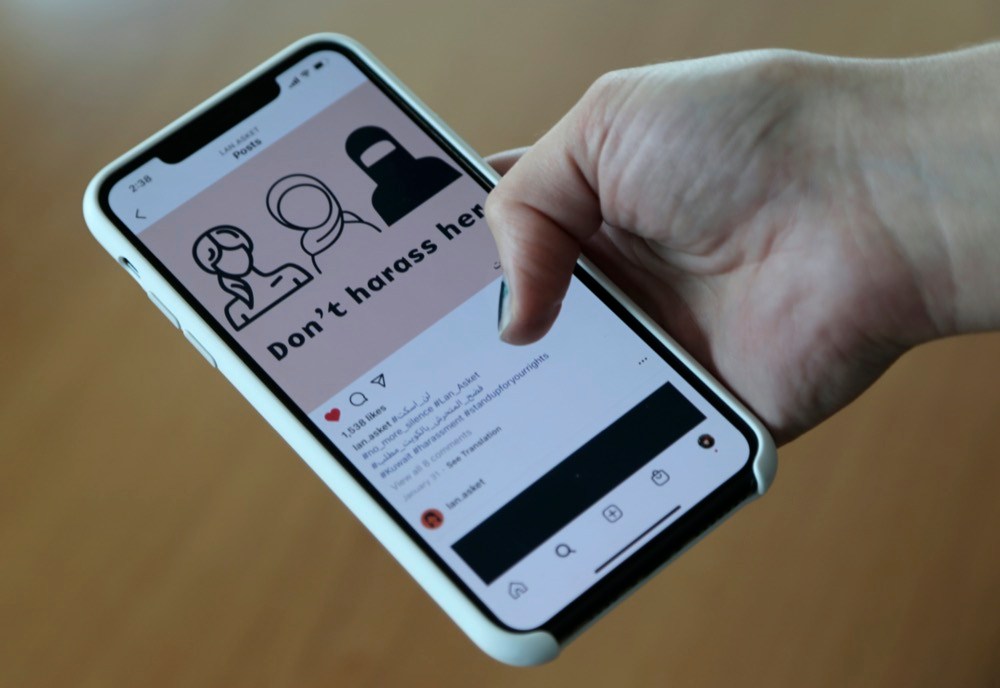
But that may be changing as women are increasingly challenging Kuwait’s deeply patriarchal society. In recent weeks, a growing number of women have broken taboos to speak out about the scourge of harassment and violence that plagues the Gulf nation’s streets, highways and malls, in an echo of the global #MeToo movement.
An Instagram page has led to an outpouring of testimony from women fed up with being intimidated or attacked in a country where the criminal code doesn’t define sexual harassment and lays out few repercussions for men who kill female relatives for actions they consider immoral. A wide variety of news and talk shows have taken up the subject of harassment for the first time. And one journalist used a hidden camera to document how women are treated in the streets.