
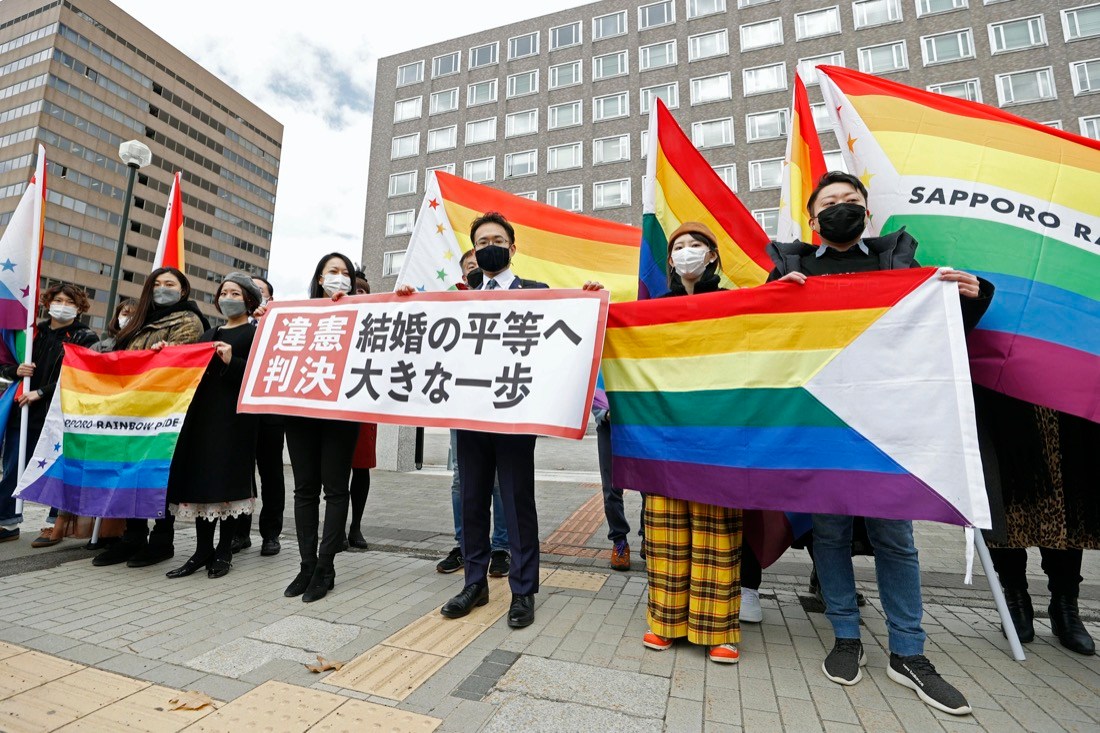
TOKYO (AP) – A Japanese court for the first time ruled Wednesday that same-sex marriage should be allowed under the country’s constitution, a moral victory that does not have any immediate legal consequence but could bolster efforts for legalization.
The Sapporo District Court said sexuality, like race and gender, is not a matter of individual preference, therefore prohibiting same-sex couples from receiving benefits given to heterosexual couples cannot be justified.
“Legal benefits stemming from marriages should equally benefit both homosexuals and heterosexuals,(asterisk) the court said, according to a copy of the summary of the ruling.
Judge Tomoko Takebe said in the ruling that not allowing same-sex marriages violates Article 14 of the Japanese constitution, which prohibits discrimination “because of race, creed, sex, social status or family origin.”
The court was hearing a case brought by three same-sex couples who were seeking government compensation for the difficulties they had to suffer from not being able to legally marry. The court declined to financially compensate the plaintiffs.