
President Joe Biden’s American Rescue Plan is incredibly popular, even among Republican voters. We don’t have details yet on the next big Democratic initiative, but we can expect it to poll well, because we know that it will combine major infrastructure spending with tax hikes on corporations and the rich – which are all popular things.
But like the rescue plan, the next plan probably won’t get a single Republican vote in Congress. Why are elected Republicans still so committed to right-wing economic policies that help the rich while shortchanging the working class?
Fair warning: I’m not going to offer a good answer to this question. The point of today’s article is, instead, to argue for the question’s importance.
I ask why Republicans are “still” committed to right-wing economics because in the past there wasn’t any puzzle about their position.
Like many observers, I saw the Republican Party essentially as an enterprise run by and for plutocrats that managed to win elections by playing to the cultural grievances and racial hostility of working-class whites. Bigotry, however, was mainly a show put on for the rubes; the party would go back to its pro-rich priorities as soon as each election was over.
The classic example came when George W. Bush won reelection by posing as America’s defender against gay married terrorists, then followed his victory by announcing that he had a mandate to privatize Social Security. (He didn’t.)
But that feels like a long time ago.
Billionaires may have started the Republican Party on its march toward extremism, but they’ve clearly lost control of the forces they conjured up. The GOP can no longer put intolerance back in the closet after each election so as to focus on the real business of tax cuts and deregulation. Instead, the extremists are in charge.
But while power in the Republican Party has shifted almost completely away from the conservative establishment, the party is still committed to an economic ideology of tax and spending cuts. And it’s not obvious why.
As a candidate, Trump promised not to cut social benefits and to begin a large infrastructure program. If he had honored those promises, if he had shown any hint of genuine populism, he might still be president. In practice, however, his tax cut and his failed attempt to repeal Obamacare were right out of the standard conservative playbook.
Was Trump’s continuation of unpopular economic policies simply a reflection of his personal ignorance and lack of interest in substance? Events since the election suggest not.
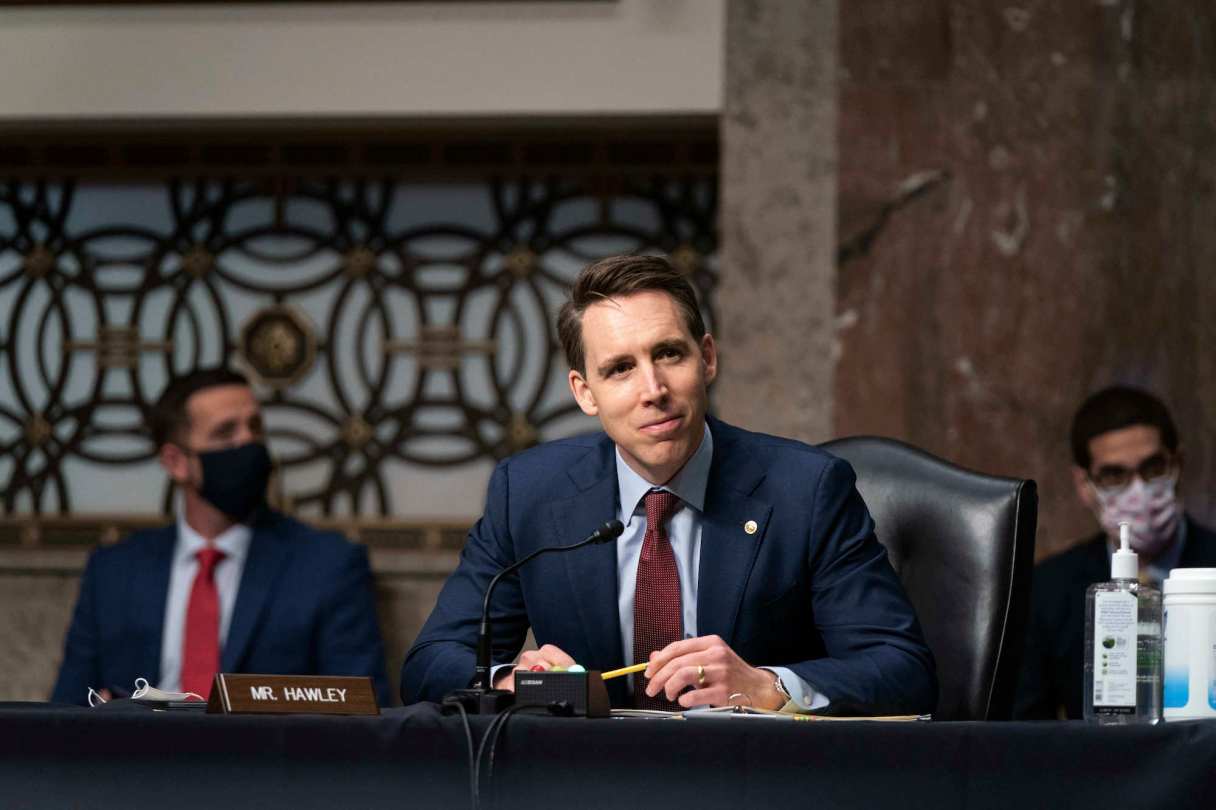
I’ve already mentioned lock-step Republican opposition to Biden’s relief package. Rejection of economic populism is also apparent at the state level. Consider Missouri. One of its senators, Josh Hawley, has declared that Republicans must be “a working-class party, not a Wall Street party.” Yet Republicans in the state’s legislature just blocked funding for an expansion in Medicaid that would cost the state very little and has already been approved by a majority of voters.
What’s going on? I suspect that the absence of true populism on the right has a lot to do with the closing of the right-wing mind: the conservative establishment may have lost power, but its apparatchiks are still the only people in the GOP who know anything about policy. And big money may still buy influence even in a party whose energy comes mainly from intolerance and hate.
In any case, for now Republican politicians are doing Democrats a big favor, clinging to discredited economic ideas that even their own supporters dislike.
The New York Times