
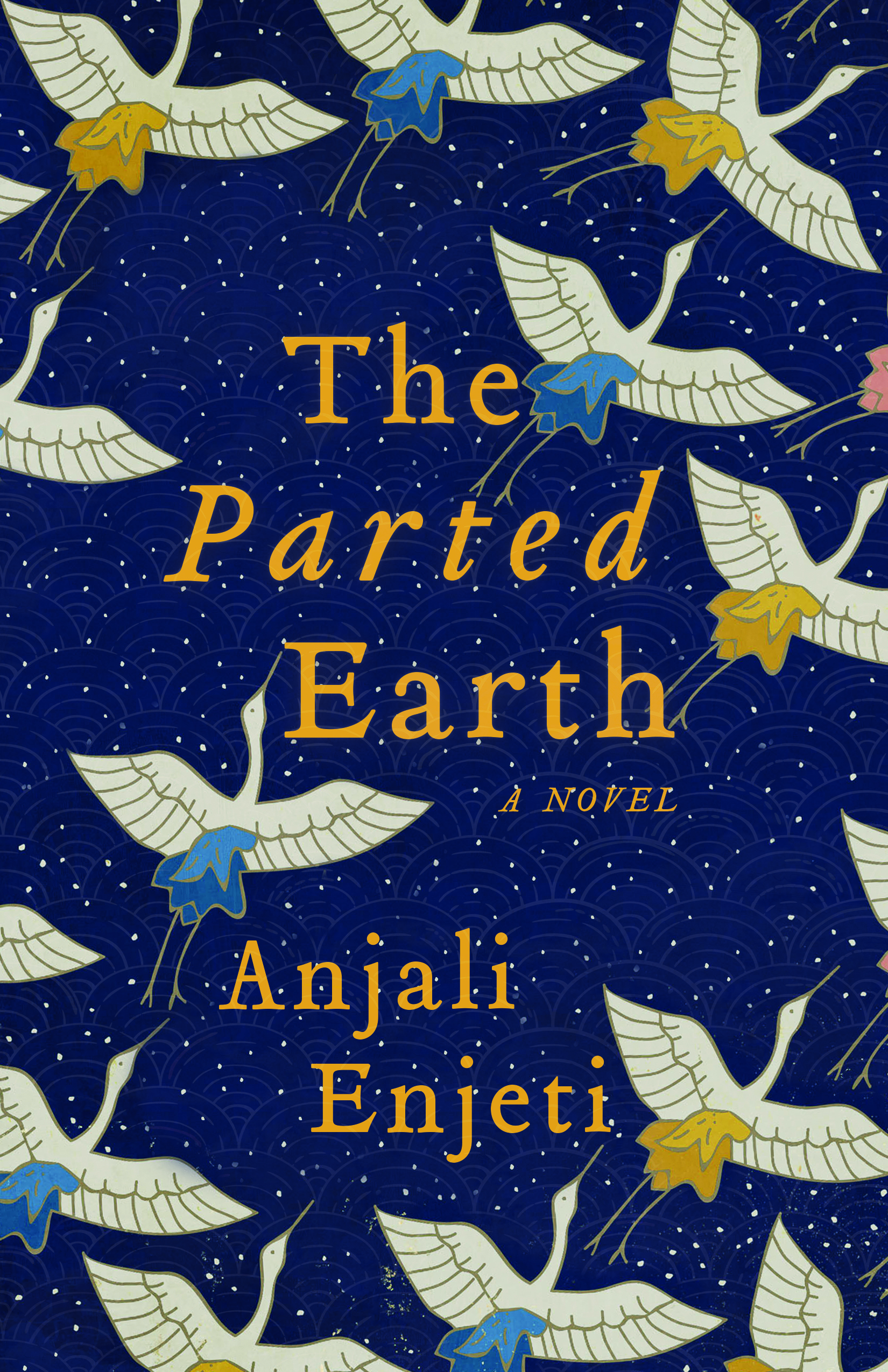
 Hub City Press / “The Parted Earth”
“THE PARTED EARTH” by Anjali Enjeti (Hub City Press, 272 pages, $26).
Running through the core of Anjali Enjeti’s debut novel, “The Parted Earth,” is the volatile atmosphere of India’s Partition, a deadly era of violence that tore apart communities and families. Spanning generations and countries, “The Parted Earth” examines the personal costs of starting over in the face of tragedy, whether those tragedies are intimate losses or shockwaves of upheaval across an entire continent.
On the eve of independence from Britain in 1947, the Indian subcontinent was rocked by the execution of its Partition policy, which created chaotic divisions between Hindu-majority and Muslim-majority cities and led to widespread sectarian unrest, mass killings and large-scale population displacement. The legacy of Partition has resulted in disputes over the India-Pakistan border that resonate to this day.
Our way into these tumultuous events comes through the eyes of Deepa, an intelligent teenage girl whose family becomes a lightning rod for extremist violence in the streets of Delhi. Deepa savors her after-school hours helping out at her parents’ medical clinic, where she enjoys analyzing every symptom and clue that the patients present. To Deepa, “People were stories, and every part of their stories influenced their physical and mental health.” Her sharp curiosity and strong compassion not only help her pinpoint diagnoses “like Sherlock Holmes solving a mystery,” but also fuel her growing passion for writing and reading.
Deepa wants to have faith “in something – in a benevolent force that provided guidance, in the possibility of transcendence.” But as religiously driven violence escalates, “only literature, the power of words and ancient stories” sustain her. Threats against her parents’ clinic – which treats both Hindu and Muslim patients – begin to intensify at the same time that Deepa falls in love with a kindhearted Muslim classmate named Amir.