
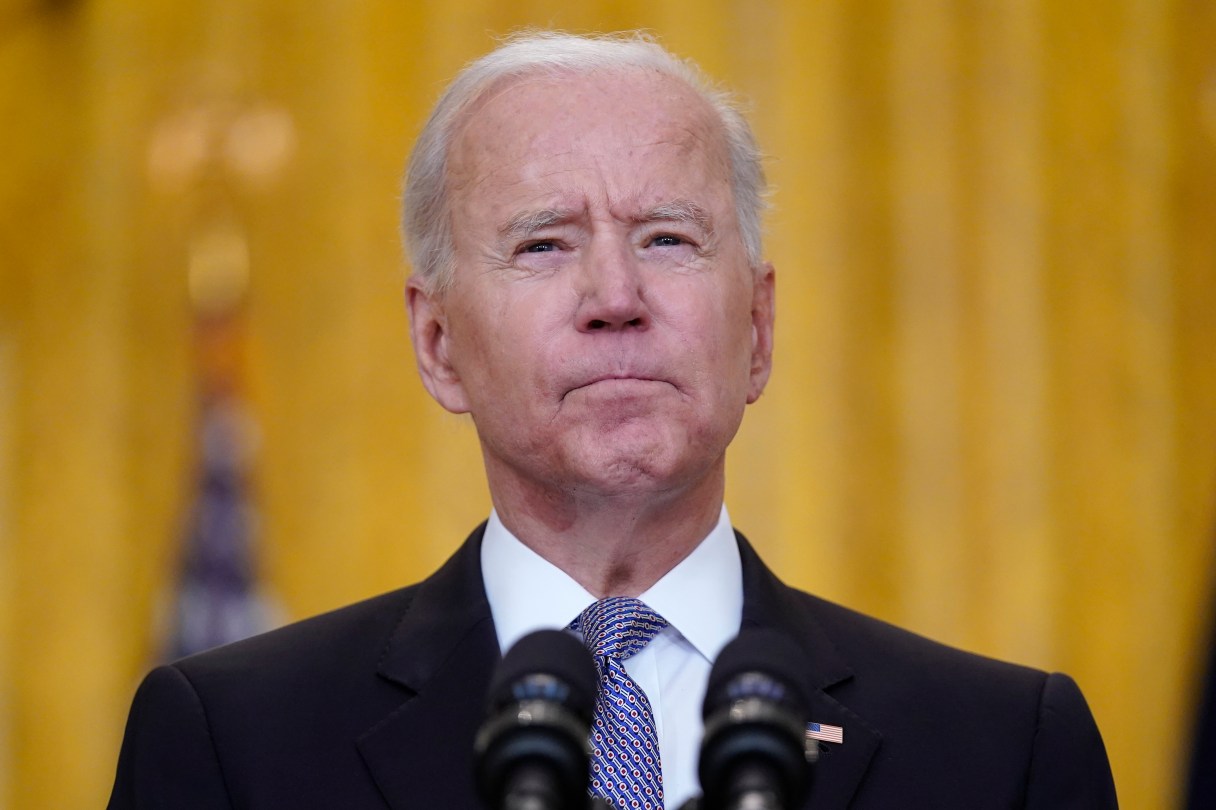
President Joe Biden expressed support for a cease-fire between Israel and Gaza’s militant Hamas rulers in a call to Israeli Prime Minister Benjamin Netanyahu on Monday, the eighth day of air strikes and rocket barrages that have killed at least 200 people, most of them Palestinians in Gaza.
Biden stopped short of joining the growing demands from Democrats and others for an immediate cease-fire in the fighting. But the White House readout of the call showed increased White House concern that the fighting – including Israeli airstrikes aimed at weakening Hamas – come to an end, while still expressing support for Israel.
The U.S. leader also “encouraged Israel to make every effort to ensure the protection of innocent civilians,” according to a White House readout.
As the worst Israeli-Palestinian fighting since 2014 raged, the Biden administration had previously limited its public criticisms to Hamas and declined to send a top-level envoy to the region, or press Israel publicly and directly to wind down its latest military operation in the Gaza Strip, a six-mile by 25-mile territory that is home to more than 2 million people. Cease-fire mediation by Egypt and others have shown no sign of progress.
The United States, Israel’s top ally, also blocked for a third time Monday what would have been a unanimous statement by the 15-nation U.N. Security Council expressing “grave concern” over the intensifying Israeli-Palestinian conflict and the loss of civilian lives. The final U.S. rejection Monday killed the Security Council statement, at least for now.