
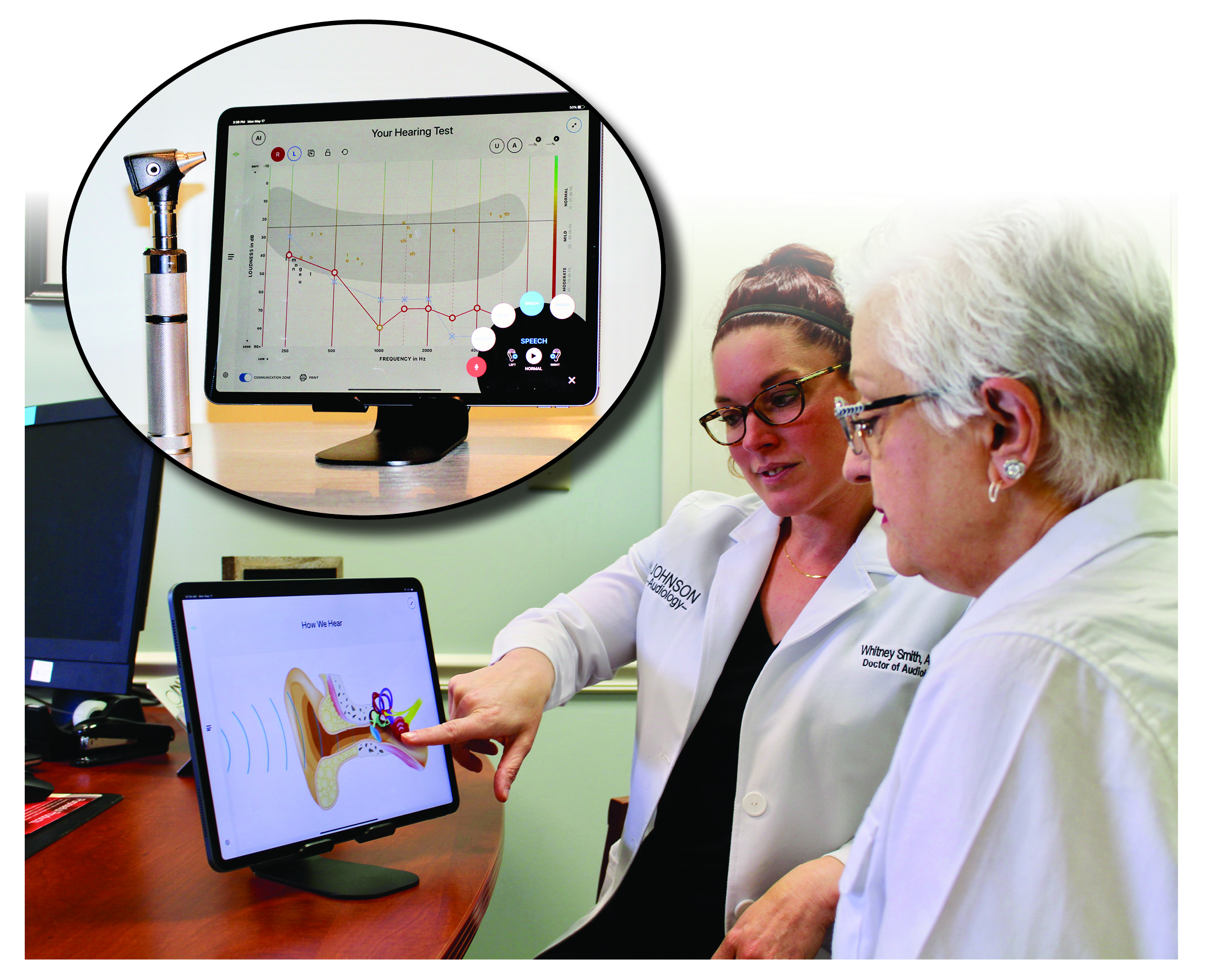
“When I first meet a new patient, I spend time getting to know them and drawing out how they would answer this question: Is hearing optional or a necessity?” said Dr. Megan Johnson, audiologist and owner of Johnson Audiology. “That gives me insight into how ready the person is to embrace that they have hearing loss and begin the journey to healthy hearing. Over the course of my 19-year career as an audiologist, I’ve learned that those who are primed and ready to address their hearing loss are the ones who will be the most successful with hearing aids.”
How important is your hearing?
Humans have five basic senses: sight, hearing, touch, smell, and taste. Eyesight provides the most information to the brain at roughly 10 million bits per second, which is similar to an Ethernet connection. The second most information-rich sense is hearing, with your ears not only in charge of transmitting sounds to the brain but also in controlling your body’s balance and equilibrium. Notably, your vision and hearing work closely together, allowing you to target where sounds are coming from; therefore, both those senses need to be in good working order.
With vision problems, most people quickly address the health issue and get glasses. “By contrast, people wait up to 10 years from the time they first notice hearing loss,” Dr. Johnson said. “I encourage people to begin assigning hearing its proper place of importance. Addressing hearing loss should be a health necessity, not something you finally seek help for when the loss is severe.”
Here are some good reasons why hearing should be a health priority.