
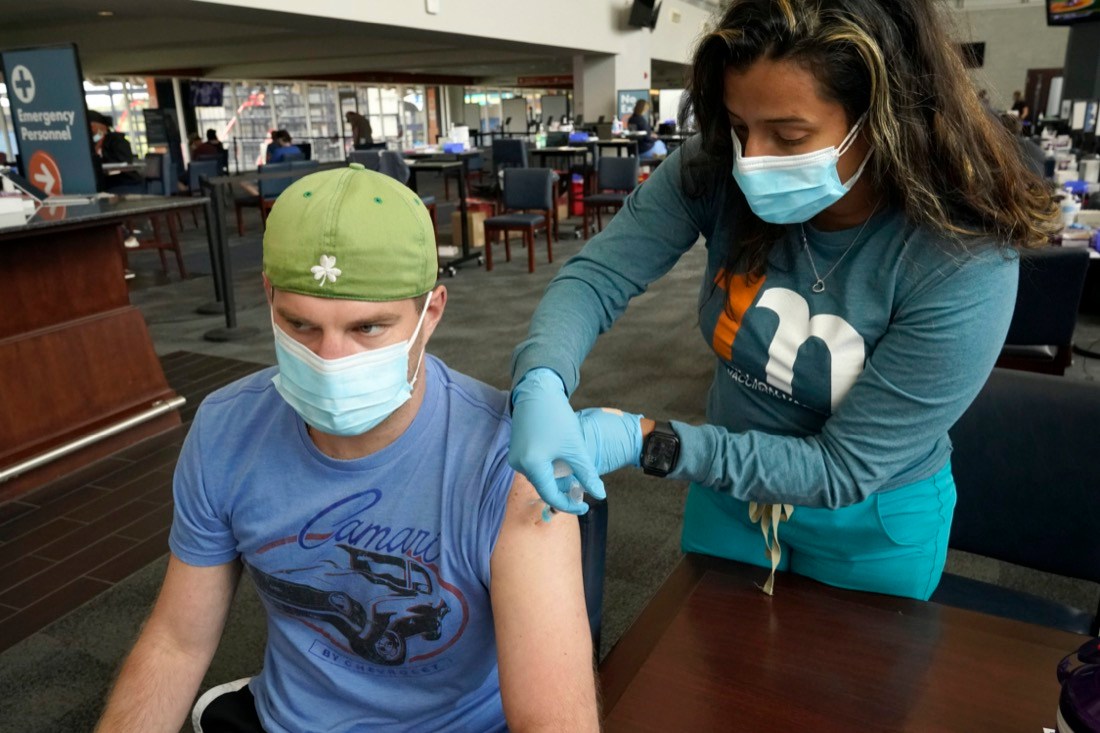
FOXBOROUGH, Mass. (AP) – A steady crowd of people flowed into the New England Patriots’ stadium for their second dose of the COVID-19 vaccine this week in Massachusetts, which is nearing its goal of vaccinating more than 4 million and plans to close its biggest clinics in little more than a month.
In the Deep South, meanwhile, one of the largest clinics in Alabama shut down Wednesday and others will follow in the coming weeks because demand for the shot has plunged.
“They didn’t have long enough to test it,” said James Martin, 68, explaining why he has no plans to get the vaccine as he stopped for cigarettes at a convenience store in Clanton, Alabama. “They don’t know what the long-term effect is. That’s what makes me skeptical.”
A month after every adult in the U.S. became eligible for the vaccine, a distinct geographic pattern has emerged: The highest vaccination rates are concentrated in the Northeast, while the lowest ones are mostly in the South.
Experts say the gap reflects a multitude of factors, including political leanings, religious beliefs, and education and income levels.