
Friday, October 30, 2026Oct 30

This story is free to read.

Electric vehicle demand will transform industry, Ford CEO says

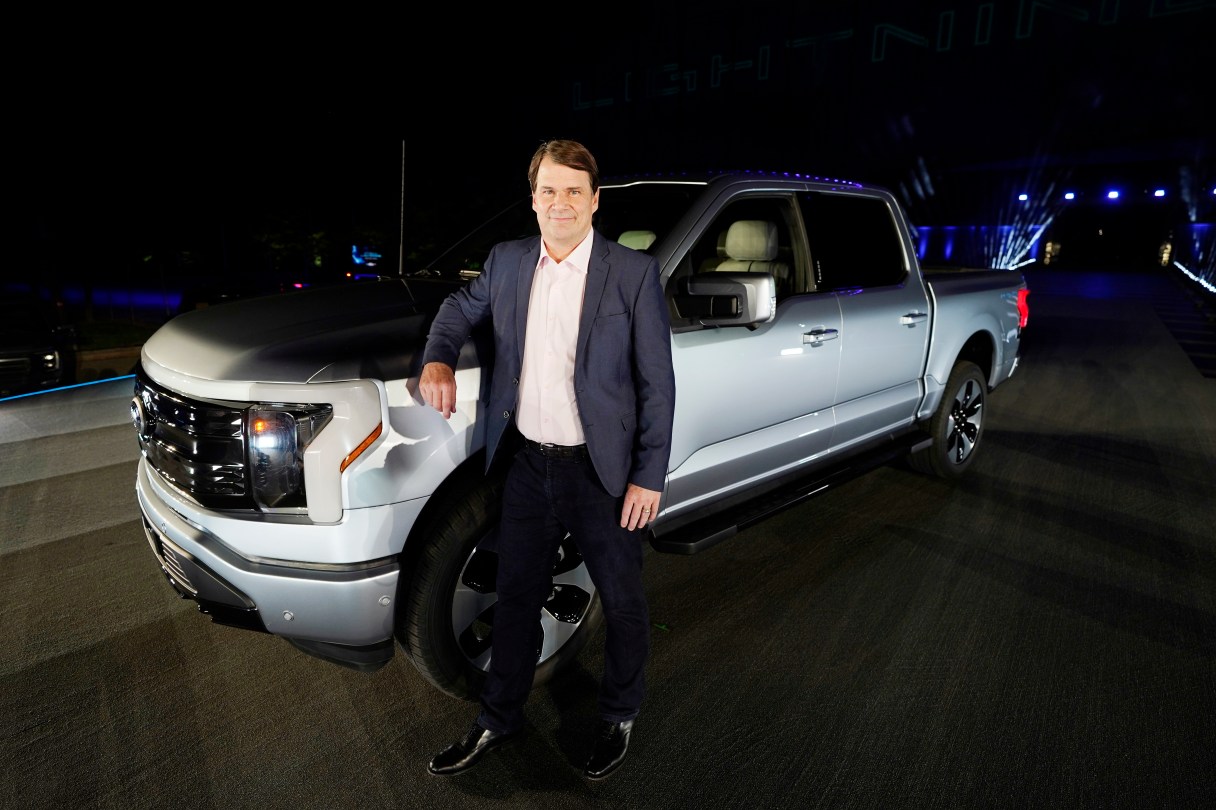
Jim Farley, Ford Motor Company's chief executive officer, stands next to the company's new Ford F-150 Lightning, Wednesday, May 19, 2021, in Dearborn, Mich. On the outside, the electric version of Ford's F-150 pickup looks about the same as the wildly popular gas-powered truck. The new truck called the F-150 Lightning can go up to 300 miles per charge, with a starting price of just under $40,000. (AP Photo/Carlos Osorio)
Jim Farley, Ford Motor Company's chief executive officer, stands next to the company's new Ford F-150 Lightning, Wednesday, May 19, 2021, in Dearborn, Mich. On the outside, the electric version of Ford's F-150 pickup looks about the same as the wildly popular gas-powered truck. The new truck called the F-150 Lightning can go up to 300 miles per charge, with a starting price of just under $40,000. (AP Photo/Carlos Osorio) Jim Farley, Ford Motor Company's chief executive officer, stands next to the company's new Ford F-150 Lightning, Wednesday, May 19, 2021, in Dearborn, Mich. On the outside, the electric version of Ford's F-150 pickup looks about the same as the wildly popular gas-powered truck. The new truck called the F-150 Lightning can go up to 300 miles per charge, with a starting price of just under $40,000. (AP Photo/Carlos Osorio)

DEARBORN, Mich. (AP) – A new electric version of Ford’s immensely popular F-150 pickup truck might just be the catalyst that hastens America’s transition from gasoline to battery-powered vehicles.

Jim Farley, the company’s new CEO, calls the introduction of an electric version of the nation’s top-selling vehicle a watershed moment for Ford as well as for the auto industry. The new truck, called the F-150 Lightning and due in showrooms by next spring, will be able to travel up to 300 miles (480 kilometers) per battery charge and tow up to 10,000 pounds (4,500 kilograms) .

Yet Ford’s commitment to the EV F-150 is hardly without risk. The company spent millions to develop the truck at a time when sales of electric vehicles remain minuscule – just 2% of the U.S. auto market. Many truck owners will be reluctant to switch from gasoline engines. And there’s the distinct possibility that at least in the early months and perhaps years of production, automakers could run short of EV batteries and the scarce precious metals needed to make them.

The Associated Press spoke recently with Farley about electric vehicle sales and a global chip shortage that has hindered auto production. The interview was edited for clarity and length.

___