
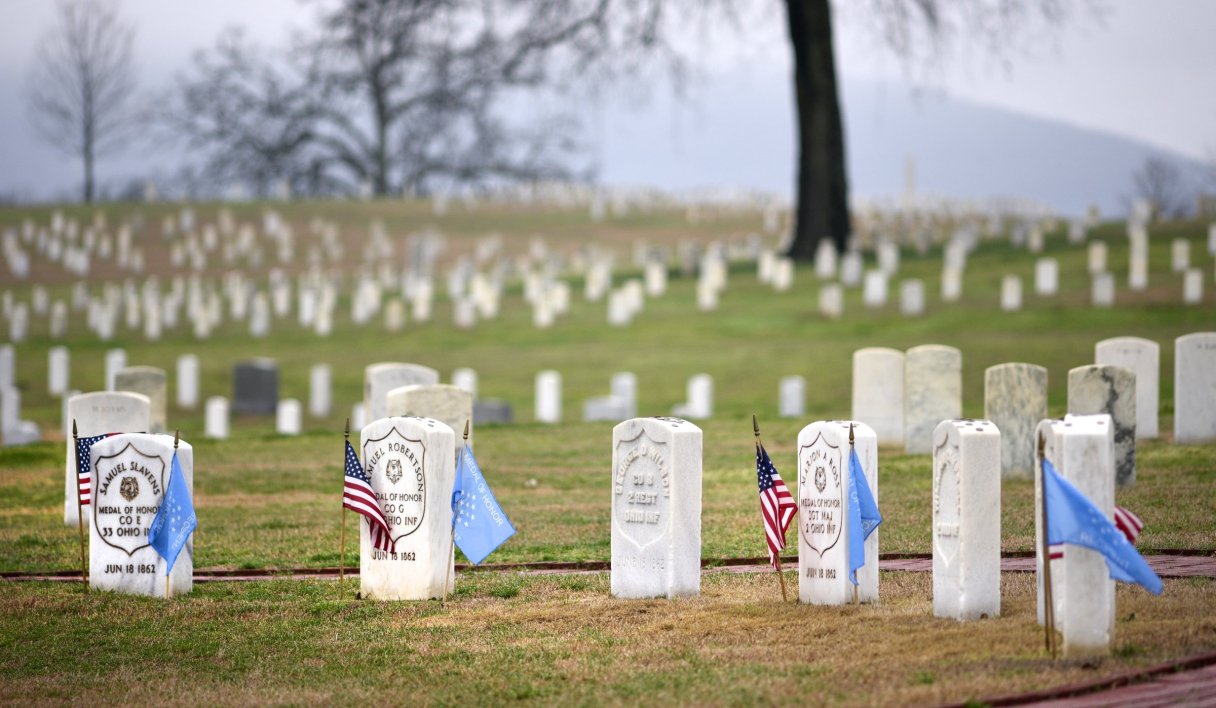
It’s the unofficial start of summer, but what else do you know about Memorial Day? Here’s a quick reminder of what the holiday is all about and a few ways to mark the day (but not “celebrate” it).
1. Civil War origins
According to History.com, the earliest observances of what became known as Memorial Day followed the Civil War, which claimed more lives than any conflict in U.S. history and necessitated the establishment of the country’s first national cemeteries. The war ended in the spring of 1865, prompting Americans in the years that followed to hold springtime tributes to the fallen soldiers, including decorating their graves with flowers.
On May 5, 1868, Gen. John A. Logan, leader of an organization for Northern Civil War veterans, called for a nationwide day of remembrance later that month. The date of Decoration Day, as he called it, was chosen because it wasn’t the anniversary of any particular battle. Eventually, the remembrance evolved to commemorate military personnel who died in any war. In 1968, Congress passed the Uniform Monday Holiday Act, which established Memorial Day as the last Monday in May. The change went into effect in 1971.