
Thursday, November 12, 2026Nov 12

Tribes mourn on Thanksgiving: ‘No reason to celebrate’

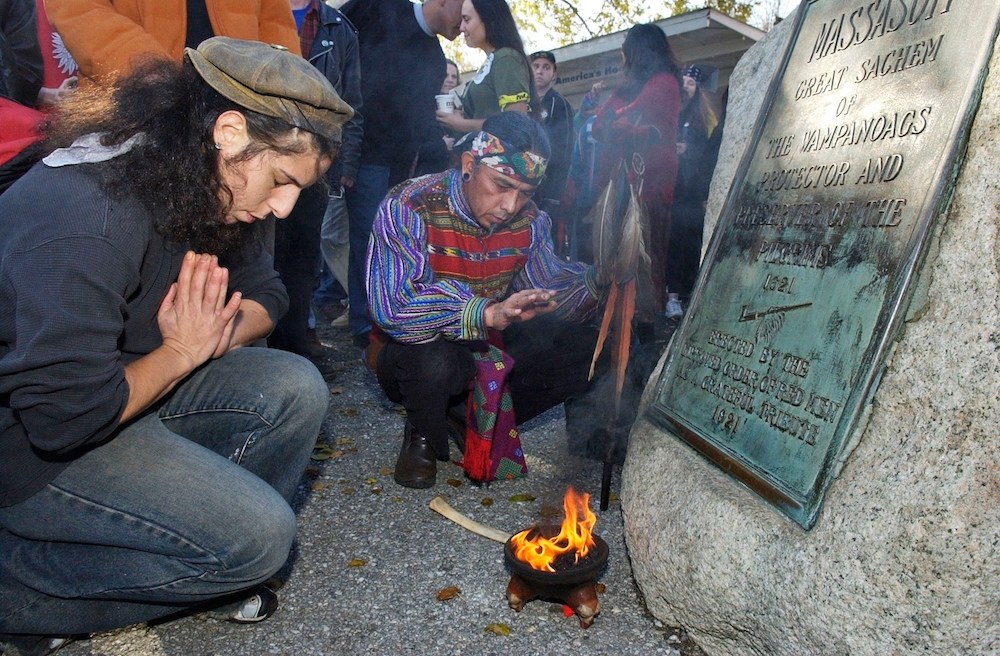
Supporters of Native Americans pause following a prayer during the 38th National Day of Mourning at Coles Hill in Plymouth, Mass., on Nov. 22, 2007. Denouncing centuries of racism and mistreatment of Indigenous people, members of Native American tribes from around New England will gather on Thanksgiving 2021 for a solemn National Day of Mourning observance. (AP Photo/Lisa Poole, File)
Supporters of Native Americans pause following a prayer during the 38th National Day of Mourning at Coles Hill in Plymouth, Mass., on Nov. 22, 2007. Denouncing centuries of racism and mistreatment of Indigenous people, members of Native American tribes from around New England will gather on Thanksgiving 2021 for a solemn National Day of Mourning observance. (AP Photo/Lisa Poole, File) Supporters of Native Americans pause following a prayer during the 38th National Day of Mourning at Coles Hill in Plymouth, Mass., on Nov. 22, 2007. Denouncing centuries of racism and mistreatment of Indigenous people, members of Native American tribes from around New England will gather on Thanksgiving 2021 for a solemn National Day of Mourning observance. (AP Photo/Lisa Poole, File)

Members of Native American tribes from around New England are gathering in the seaside town where the Pilgrims settled – not to give thanks, but to mourn Indigenous people worldwide who’ve suffered centuries of racism and mistreatment.

Thursday’s solemn National Day of Mourning observance in downtown Plymouth, Massachusetts, will recall the disease and oppression that European settlers brought to North America.

“We Native people have no reason to celebrate the arrival of the Pilgrims,” said Kisha James, a member of the Aquinnah Wampanoag and Oglala Lakota tribes and the granddaughter of Wamsutta Frank James, the event’s founder.

“We want to educate people so that they understand the stories we all learned in school about the first Thanksgiving are nothing but lies. Wampanoag and other Indigenous people have certainly not lived happily ever after since the arrival of the Pilgrims,” James said.

“To us, Thanksgiving is a day of mourning, because we remember the millions of our ancestors who were murdered by uninvited European colonists such as the Pilgrims. Today, we and many Indigenous people around the country say, ‘No Thanks, No Giving.'”