
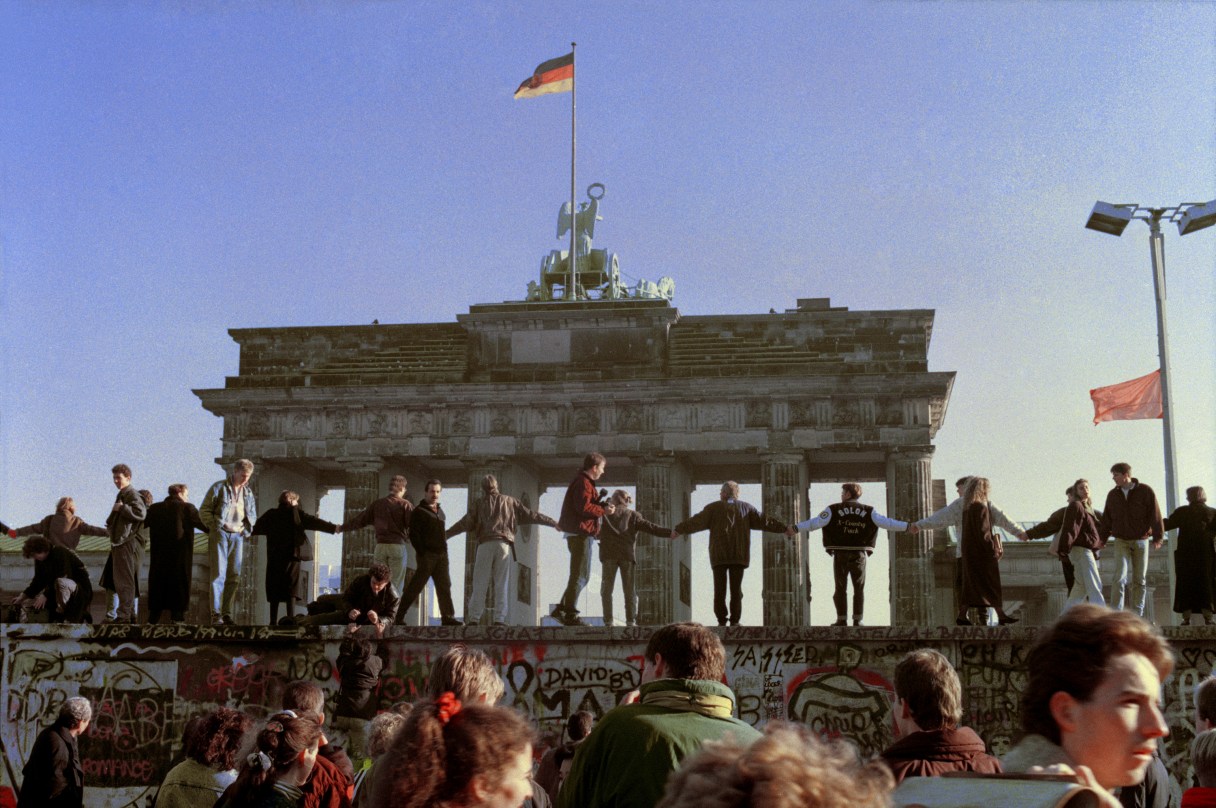
November marks a pair of important anniversaries, bookends of a dark period in human history. In the first week of November (often dated as October by the older Julian calendar) 1917, Russian revolutionaries under Vladimir Lenin overthrew the moderate socialist government of Alexander Kerensky and established the first Marxist regime. Almost precisely 72 years later, on Nov. 9, 1989, the Berlin Wall was torn down, and with it (at least symbolically) the diabolical worldview that had trapped and enslaved a third of humanity.
You would think, considering its extensive and deadly track record, the demise of Communism would be celebrated by everyone. Conservatives can rejoice in the casting down of a belief system intent on desecrating the wisdom from the past, and liberals could cherish the freedom from tyranny that the fall of the Wall represented. However, far too many people, particularly in academia, continue to see the legacy of Communism through rose-colored glasses.
A few weeks ago, I mentioned the high school advanced-placement government teacher in Sacramento who was suspended for encouraging his students to take up far-left activities. Hanging in his classroom was a poster of Mao Zedong who, if you recall, was responsible for over 50 million deaths in the 20th century. That’s more than anyone else, including Joseph Stalin and Adolf Hitler.
While this may be an extreme case, it’s unsettling how history’s greatest killers are so often remembered. We’ve all seen the Che Guevara posters and T-shirts, ironic given his views on race and sexuality and, pun intended, the capitalization of his image.
The selective memory goes beyond pop culture. According to the Acton Institute, about 30% of the rising generation has a favorable view of Marxism. How can an ideology that animated oppressive control over billions, inspired Soviet Gulags and East European secret police and instigated mass starvations in Europe and Asia seem positive to anyone?