
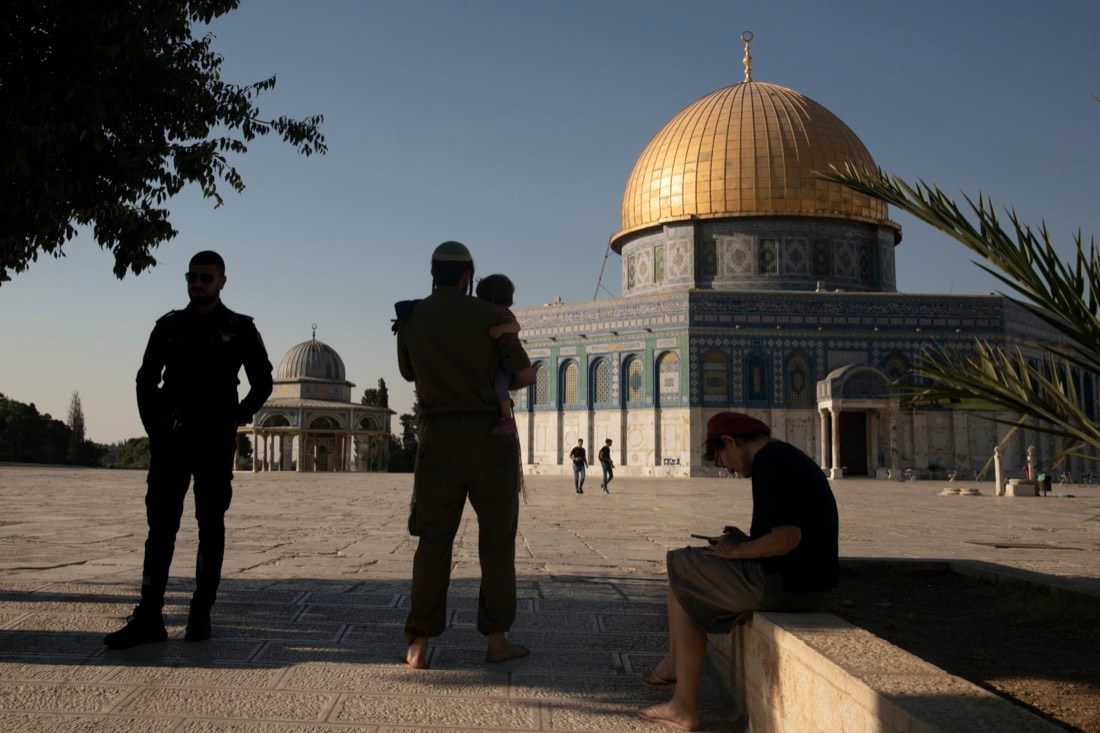
JERUSALEM (AP) – A ruling by a local Israeli court in favor of a Jewish man who prayed quietly at a flashpoint Jerusalem holy site has angered Muslim authorities, who denounced it on Thursday as a violation of the fragile status quo governing the compound.
The Al-Aqsa mosque compound is the third holiest site in Islam and the holiest site for Jews, who refer to it as the Temple Mount because it was the location of the ancient Jewish Temples. It is the emotional epicenter of the Israeli-Palestinian conflict, and tensions there helped ignite the 11-day Gaza war in May. Under informal understandings, Jews are not allowed to pray there.
The ruling by a magistrate court in Jerusalem concerned a Jewish man who had been barred from the site for 15 days after Israeli police caught him quietly praying there. The court lifted the ban several days early, ruling that the man, “like many others, prays on a daily basis on the Temple Mount.”
Noting that he did so quietly and privately, the ruling said “this activity by itself is not enough to violate the police instructions.”
Magistrate courts make up the lowest level of the Israeli judiciary and hear cases concerning relatively minor crimes.