
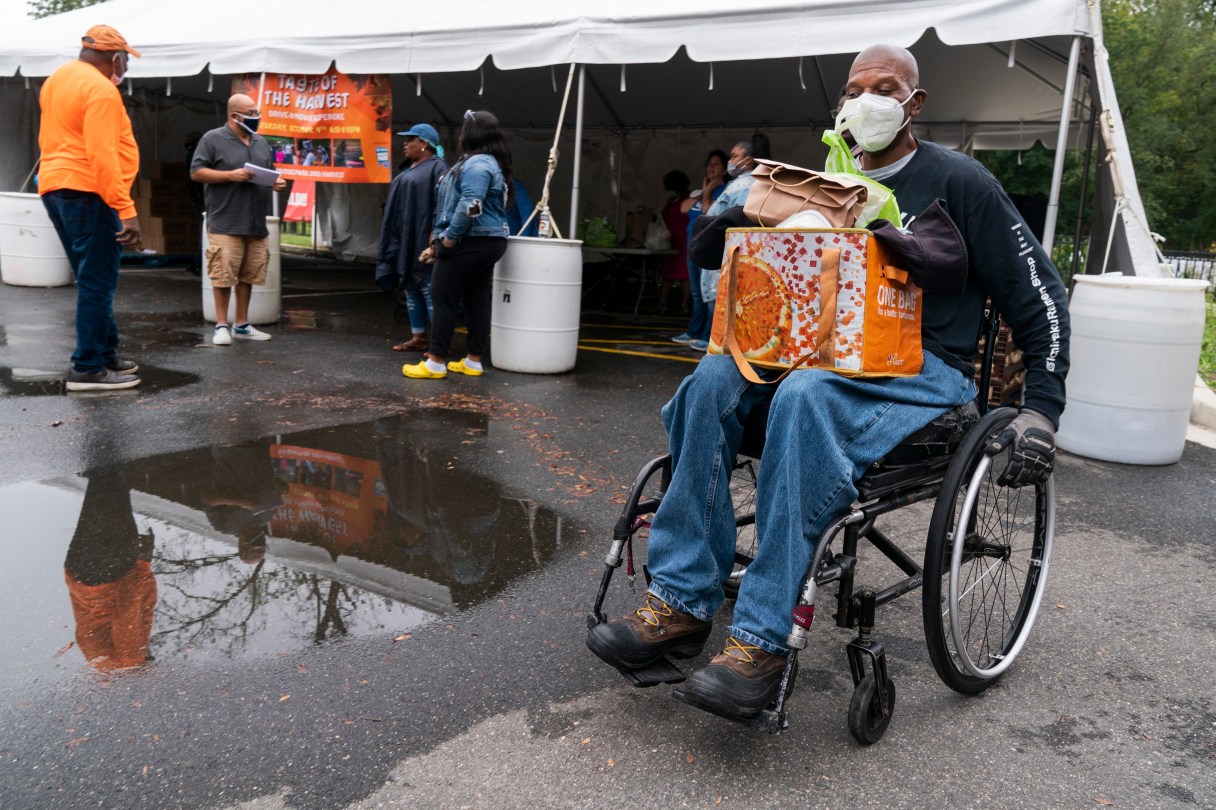
WASHINGTON (AP) – Hunger and food insecurity across the United States have dropped measurably over the past six months, but the need remains far above pre-pandemic levels. And specialists in hunger issues warn that the situation for millions of families remains extremely fragile.
An Associated Press review of bulk distribution numbers from hundreds of food banks across the country revealed a clear downward trend in the amount of food handed out across the country, starting in the spring as the COVID-19 vaccine rollout took hold and closed sectors of the economy began to reopen.
“It’s come down, but it’s still elevated,” said Katie Fitzgerald, COO of Feeding America, a nonprofit organization that coordinates the efforts of more than 200 food banks across the country and that provided the AP with the national distribution numbers. She warned that despite the recent decreases, the amount of food being distributed by Feeding America’s partner food banks remained more than 55% above pre-pandemic levels. “We’re worried (food insecurity) could increase all over again if too many shoes drop,” she said.
Those potential setbacks include the advance of the delta variant of the coronavirus, which has already delayed planned returns to the office for millions of employees and which could threaten school closures and other shutdowns as the nation enters the winter flu season. Other obstacles include the gradual expiration of several COVID-19-specific protections such as the eviction moratorium and expanded unemployment benefits.
All told, families facing food insecurity find themselves still dependent on outside assistance and extremely vulnerable to unforeseen difficulties.