
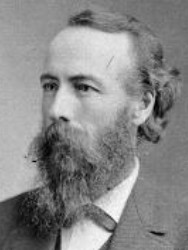
 Contributed Photo / Henry Van Ness Boynton, for whom Boynton Park on Cameron Hill was named, served as a Union officer at Chickamauga and Chattanooga during the Civil War and later helped established Chickamauga and Chattanooga National Military Park.
(Editor’s note: Second of three parts)
No history of Chattanooga’s historic Cameron Hill would be complete without paying a tribute to Boynton Park and the Medal of Honor recipient for whom it was named.
A 1957 letter to the Chattanooga News-Free Press asked the question: Who was Boynton and why was the park on Cameron Hill named for him? Zella Armstrong, then-Hamilton County historian, responded that “General Boynton conceived the plan for the Chickamauga-Chattanooga National Military Park” and that the city of Chattanooga had “named a park on the crest of Cameron Hill” for him. It was an accurate but somewhat simplified answer.
Henry Van Ness Boynton was born in 1835 in Massachusetts. His clergyman father moved the family to Ohio within a decade. Boynton graduated from Woodward College in Cincinnati in the mid-1850s and then from the Kentucky Military Institute in 1858. An excellent student, he was asked to join the faculty of the military school where he taught until the opening volleys of the U.S. Civil War.
Boynton probably caught his first glimpses of Chattanooga while serving in the command of Gen. George Thomas, the “Rock of Chickamauga.” Boynton was with Thomas from Mill Springs through Chickamauga and Chattanooga, where he was brevetted brigadier-general, and until the Battle of Atlanta. His experiences at Chickamauga and Chattanooga affected Boynton’s future in ways he probably could not have imagined during his days of combat.