
Friday, October 30, 2026Oct 30

This story is free to read.

Loftin: Can Tennesee lawmakers avoid political malpractice?

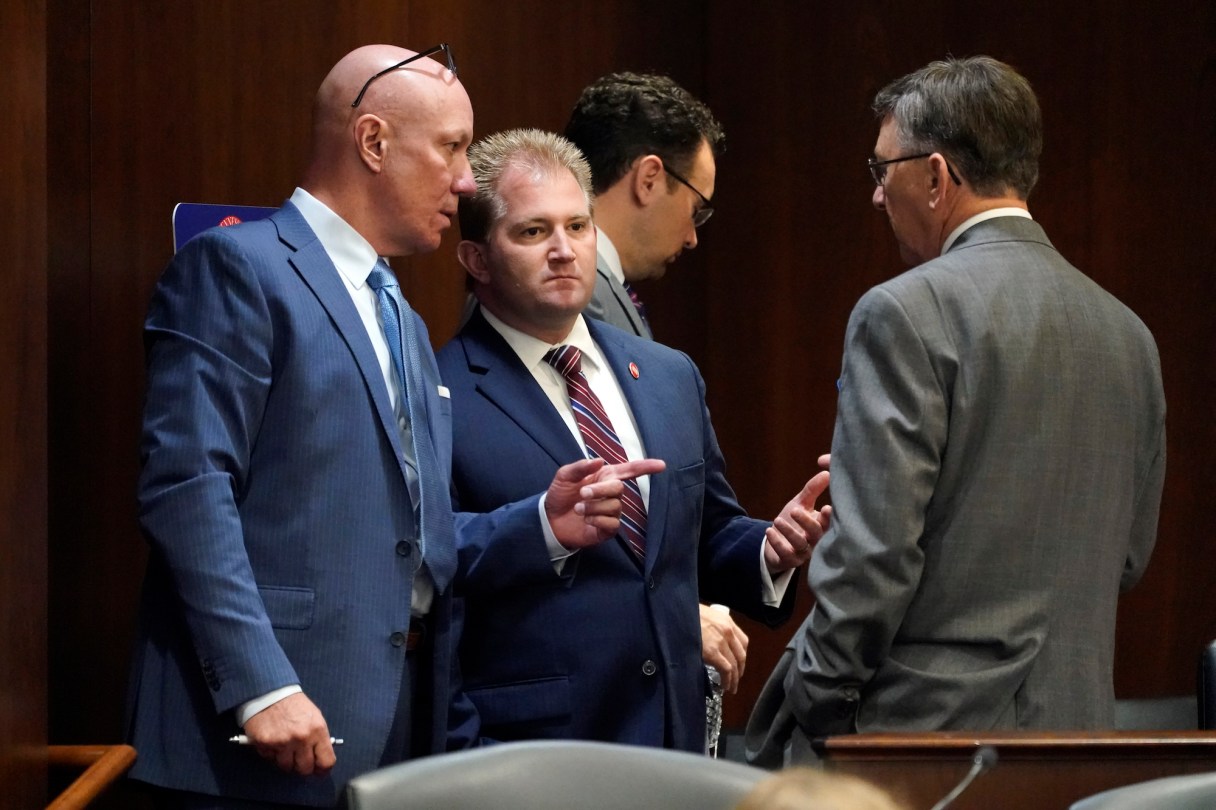
Photo by Mark Humphrey of The Associated Press / Rep. Mark Hall, R-Cleveland, left, talks with Rep. William Lamberth, R-Portland, before a meeting of the COVID-19 Committee on Oct. 28, 2021, in Nashville, Tenn. Tennessee's General Assembly is meeting for a special legislative session to address COVID-19 measures.
Photo by Mark Humphrey of The Associated Press / Rep. Mark Hall, R-Cleveland, left, talks with Rep. William Lamberth, R-Portland, before a meeting of the COVID-19 Committee on Oct. 28, 2021, in Nashville, Tenn. Tennessee's General Assembly is meeting for a special legislative session to address COVID-19 measures. Photo by Mark Humphrey of The Associated Press / Rep. Mark Hall, R-Cleveland, left, talks with Rep. William Lamberth, R-Portland, before a meeting of the COVID-19 Committee on Oct. 28, 2021, in Nashville, Tenn. Tennessee's General Assembly is meeting for a special legislative session to address COVID-19 measures.

A few days before legislators convened in a special session to address controversial COVID vaccination requirements and mask mandates in Tennessee, state Sen. Mark Pody, R-Lebanon, previewed his intentions :

“There is an evil government in Washington, D.C., that is overstepping its bounds and is trying to replace God with it. They’re trying to tell each and everyone of us what we can and cannot do.”

(And you thought God had always made clear what everyone, not just Tennesseans, can and cannot do. But I digress.)

Republicans constitute a super-majority in the General Assembly. If nothing else, that advantage imposes upon them a responsibility to avoid producing legislation so infected with social media stupidity that Gov. Bill Lee would be obliged to veto it. Whether the legislators would override his veto is, of course, anybody’s guess.

Before they get to the point of embarrassing themselves, the super-majoritarians should consider how their predecessors dealt with essentially the same issue 54 years ago.