
Saturday, November 14, 2026Nov 14

China bans men it sees as not masculine enough from TV

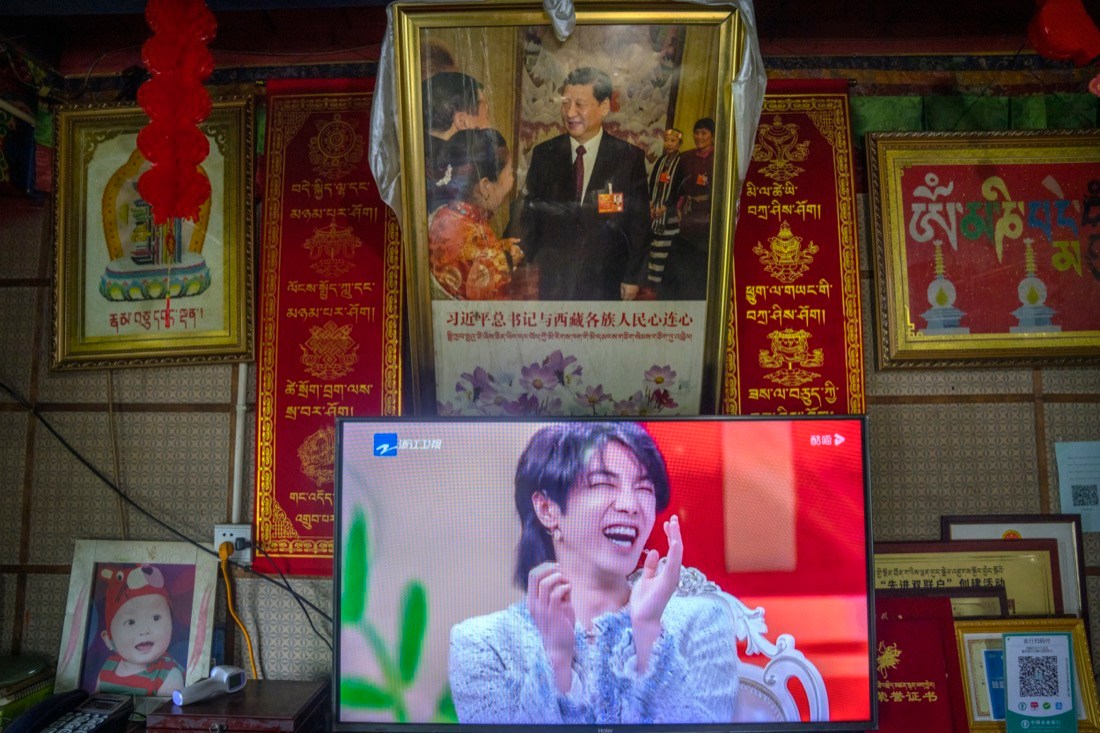
FILE - In this June 4, 2021, file photo, a television shows a broadcast of a Chinese talk show program as it sits beneath a photo of Chinese President Xi Jinping in a home converted into a tourist homestay in Zhaxigang village near Nyingchi in western China's Tibet Autonomous Region. China's government banned effeminate men on TV and told broadcasters Thursday, Sept. 2, 2021 to promote "revolutionary culture," broadening a campaign to tighten control over business and society and enforce official morality. (AP Photo/Mark Schiefelbein, File)

BEIJING (AP) – China’s government banned effeminate men on TV and told broadcasters Thursday to promote “revolutionary culture,” broadening a campaign to tighten control over business and society and enforce official morality.

President Xi Jinping has called for a “national rejuvenation,” with tighter Communist Party control of business, education, culture and religion. Companies and the public are under increasing pressure to align with its vision for a more powerful China and healthier society.

The party has reduced children’s access to online games and is trying to discourage what it sees as unhealthy attention to celebrities.

Broadcasters must “resolutely put an end to sissy men and other abnormal esthetics,” the TV regulator said, using an insulting slang term for effeminate men – “niang pao,” or literally, “girlie guns.”

That reflects official concern that Chinese pop stars, influenced by the sleek, girlish look of some South Korean and Japanese singers and actors, are failing to encourage China’s young men to be masculine enough.