
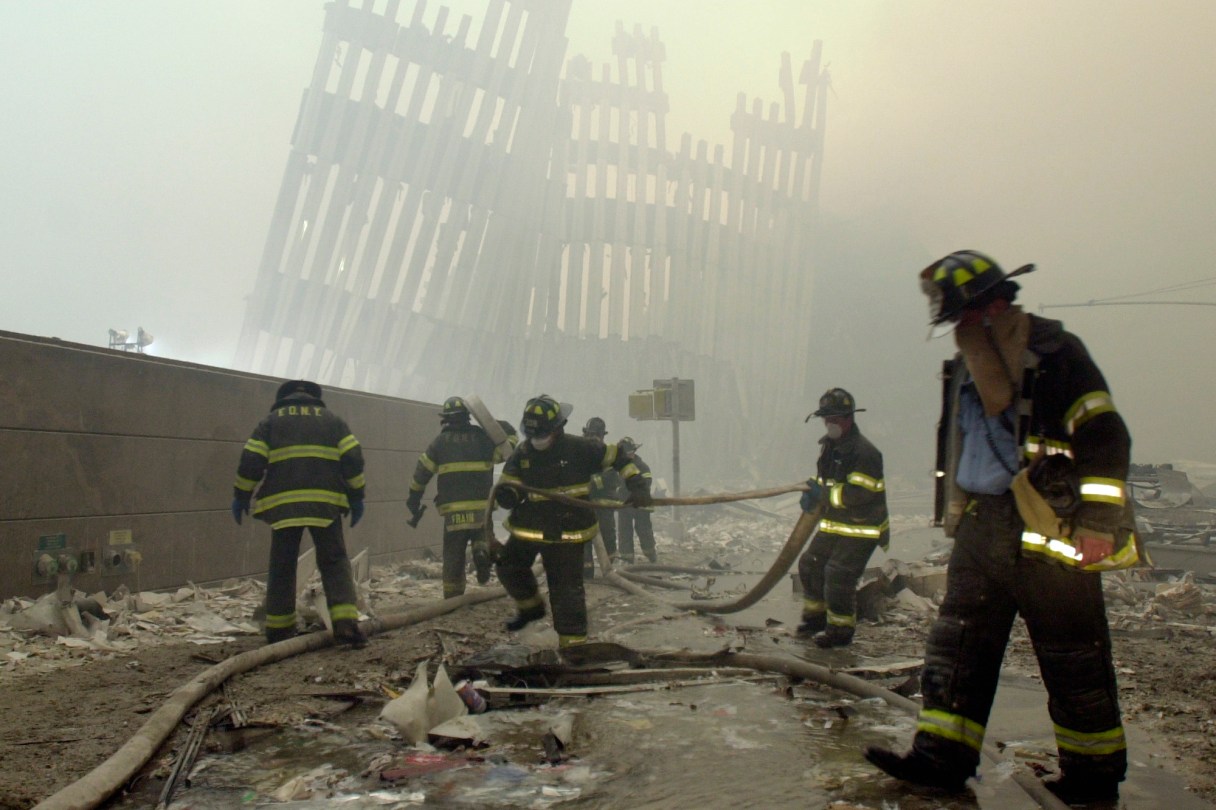
These annual Sept. 11, 2001, commemorations have always been momentous and solemn occasions, and the attention of the American people is where it deserves to be – on the men, women and children who needlessly died that day. It is right and proper that our focus should be first and foremost on the tragic loss of those lives.
It is also right and proper that we should reflect on the lessons of 9/11 and how it came to pass that more than 2,600 Americans were killed over the course of a few hours that day. Even more importantly, we should ask ourselves whether the United States has learned the lessons of 9/11, and whether our government lived up to the commitment that encapsulates the post-9/11 admonition of the American people: “Never Forget.”
But it seems that our government may have forgotten the central lesson of 9/11 – that loosely governed lands over which the U.S. has little or no intelligence visibility create the permissive environment most attractive to terrorist organizations that desire to strike America. The collapse of Afghanistan into the arms of the Taliban has once again set the stage for that nation to host terrorist groups that target the West.
Already there are reports that the Taliban’s return has inspired and boosted the morale of militants in Southeast Asia, some of whom plan to travel to Afghanistan for training. It may be that in no time al-Qaida reconstitutes itself and, harbored by the Taliban, once again becomes a threat to America and its allies. The Islamic State and other terrorist groups may also seek sanctuary in Afghanistan.
The U.S. intelligence community has long believed that it would take up to two years after a U.S. withdrawal from Afghanistan before a reconstituted al-Qaida could pose a threat to America. Of course, the American people are right to be skeptical of such assessments given that President Joe Biden recently predicted it was “highly unlikely” that the Taliban would overrun Afghanistan and own the whole country.