
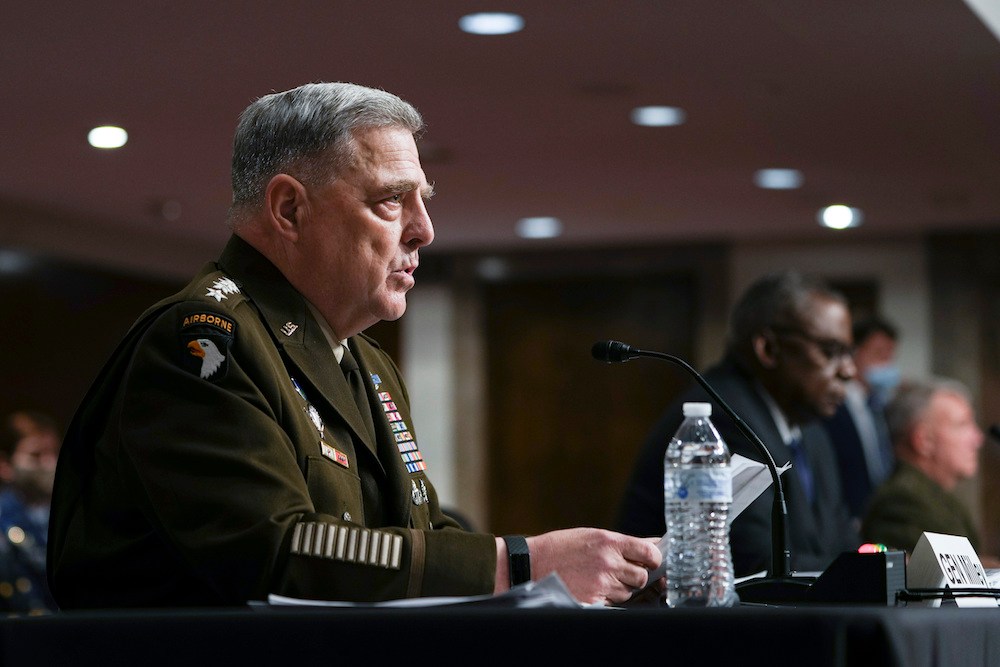
WASHINGTON (AP) – The top U.S. military officer called the 20-year war in Afghanistan a “strategic failure” and acknowledged to Congress that he had favored keeping several thousand troops in the country to prevent a collapse of the U.S.-supported Kabul government and a rapid takeover by the Taliban.
Republicans on the Senate Armed Services Committee pointed to the testimony Tuesday by Gen. Mark Milley, chairman of the Joint Chiefs of Staff, as evidence that President Joe Biden had been untruthful when, in a television interview last month, he suggested the military had not urged him to keep troops in Afghanistan.
Milley refused to say what advice he gave Biden last spring when Biden was considering whether to comply with an agreement the Trump administration had made with the Taliban to reduce the American troop presence to zero by May 2021, ending a U.S. war that began in October 2001. Testifying alongside Milley, Defense Secretary Lloyd Austin also refused to reveal his advice to Biden.
Milley told the committee, when pressed, that it had been his personal opinion that at least 2,500 U.S. troops were needed to guard against a collapse of the Kabul government and a return to Taliban rule.
Defying U.S. intelligence assessments, the Afghan government and its U.S.-trained army collapsed in mid-August, allowing the Taliban, which had ruled the country from 1996 to 2001, to capture Kabul with what Milley described as a couple of hundred men on motorcycles, without a shot being fired. That triggered a frantic U.S. effort to evacuate American civilians, Afghan allies and others from Kabul airport.