
GLEN ARBOR, Mich. (AP) – Concealed behind trees near Lake Michigan, two scientists remotely manipulated a robotic owl on the forest floor. As the intruder flapped its wings and hooted, a merlin guarding its nest in a nearby pine darted overhead, sounding high-pitched, rapid-fire distress calls.
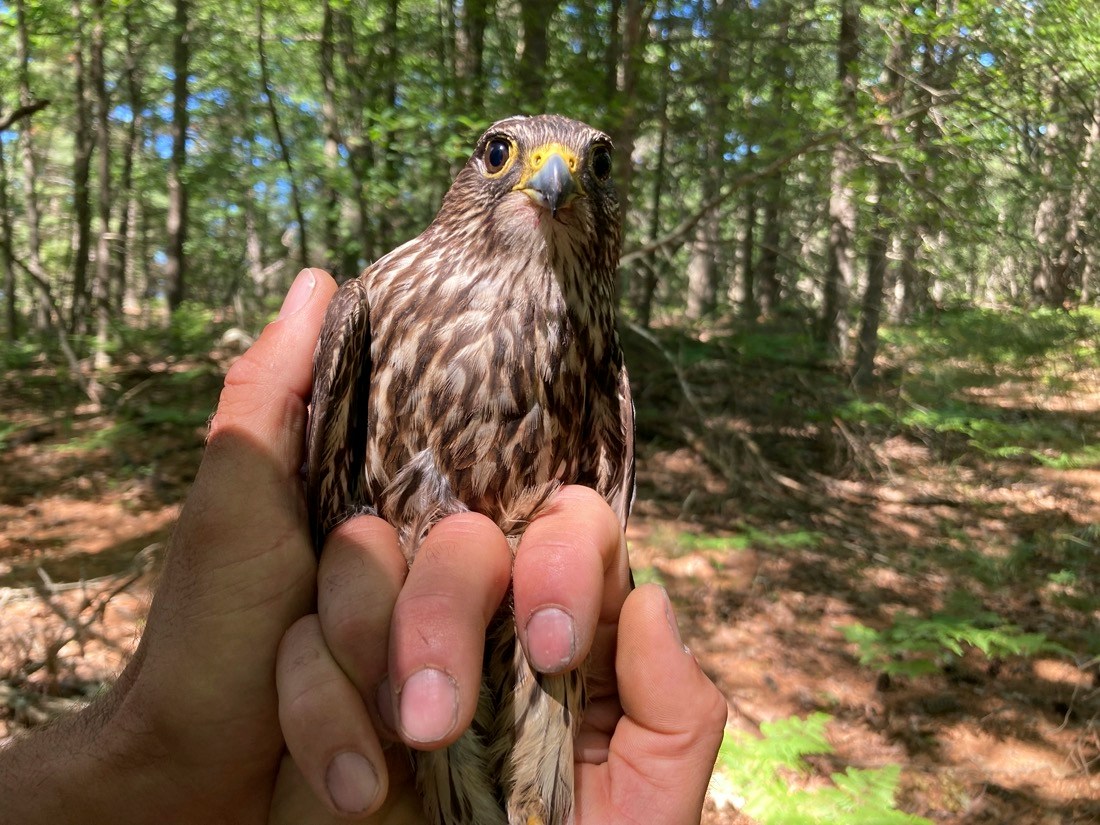
The small falcon dove toward the enemy – and into a net that Smithsonian interns Tim Baerwald and Zachary Bordner had stretched between steel poles. They gently disentangled the brownish-speckled merlin, then attached a leg band and a backpack transmission unit so researchers could trace the mother bird’s movements.
“As long as it’s fitted correctly, she’ll have a long and happy life,” Baerwald said before Bordner released the merlin, which zipped back to its nesting tree.
The mission will enhance knowledge of a species still recovering from a significant drop-off caused by pesticides including DDT, banned in 1972 after harming many birds of prey. It also is helping Sleeping Bear Dunes National Lakeshore managers protect the piping plover, an endangered shorebird that merlins kill and eat.
“Merlins are a big threat to their recovery,” said Nathan Cooper, a research ecologist with Smithsonian’s National Zoo and Conservation Biology Institute.