
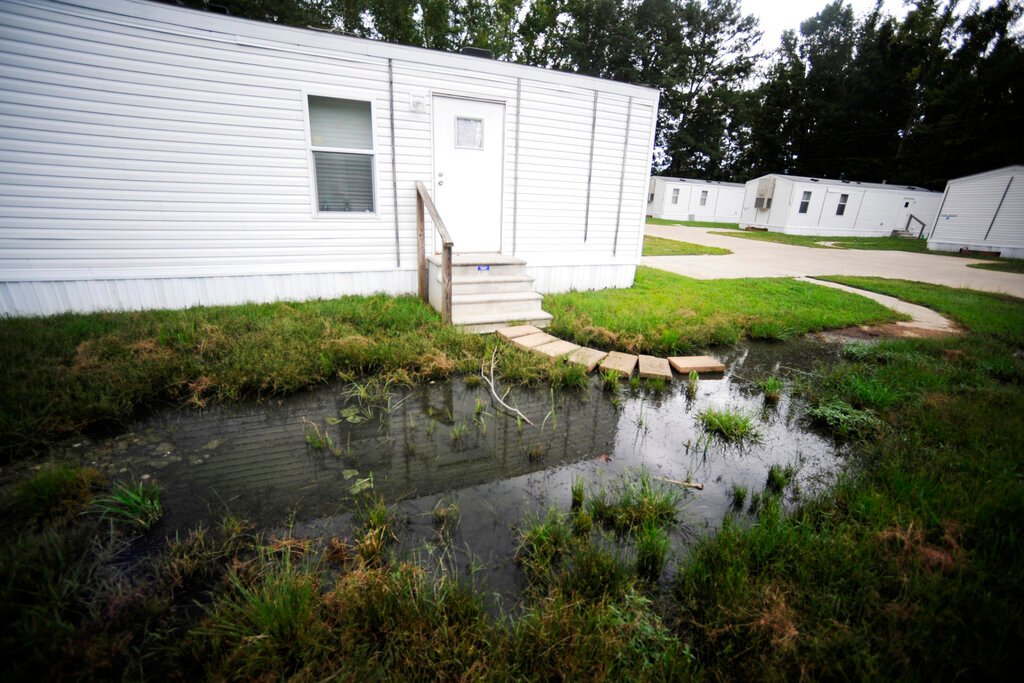
HAYNEVILLE, Ala. (AP) – When there’s heavy rain, human waste from the pond of sewage across the street from Charlie Mae Holcomb’s home covers her front yard in rural Alabama. She can’t remember how many times she’s had to rip the flooring out of her small brick house because raw sewage backed up out the pipes.
Holcomb lives in Hayneville, a community in Lowndes County of fewer than 1,000, where roughly one-third of people live in poverty and about 85% are Black. The 73-year-old has become an unofficial spokeswoman for people living with poor drainage and disgusting sewage problems that go back generations.
“It’s not just mine, it’s almost all the people. They just won’t talk,” said Holcomb.
The heads of the U.S. Environmental Protection Agency and U.S. Department of Agriculture came to Lowndes County to announce Tuesday a pilot program to help rural communities that face serious sewage problems like those here. Inferior sewage systems allow waste to back up and pool, threatening public health and degrading basic dignity.
Federal officials said the new pilot will help 11 communities assess their sewage problems, plan improvements and receive the financial and technical help to make those plans real. In addition to Lowndes County, the effort will help two West Virginia counties and the San Carlos Apache Tribe in Arizona, among other areas.