
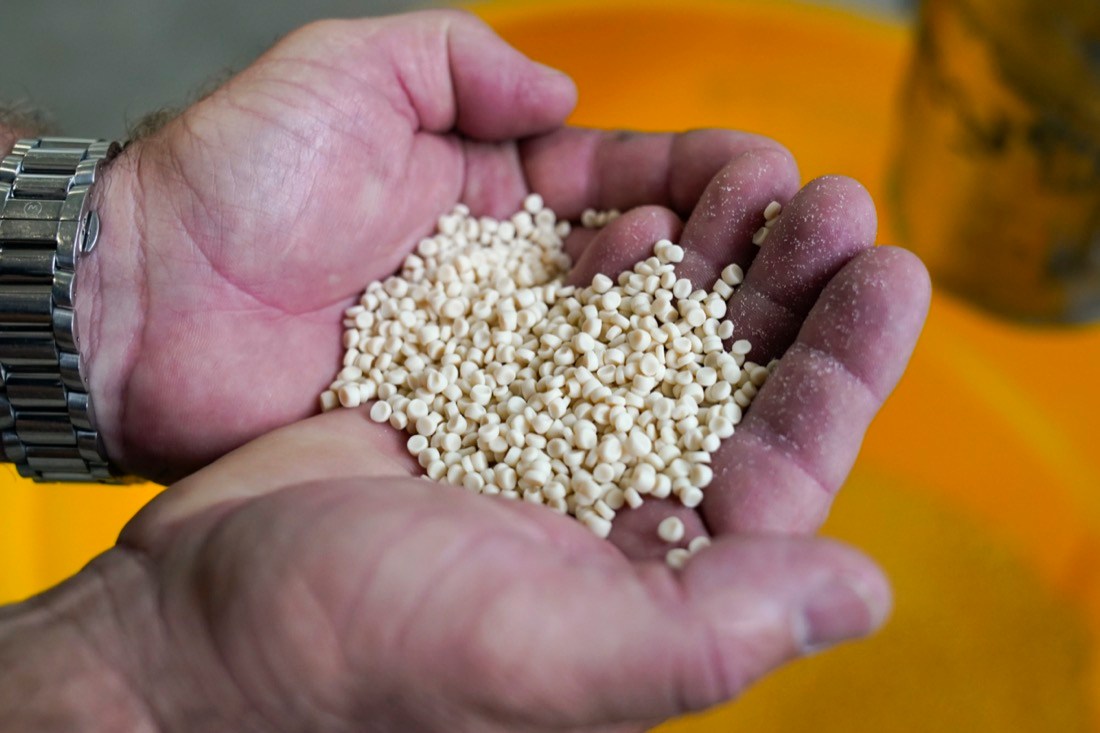
CLEVELAND (AP) – In a world increasingly troubled by the persistent harm that plastic – manufactured in petrochemical plants – has had on the environment, companies are investing billions of dollars to ramp up production of plastics made from natural, renewable materials that can be safely composted or can biodegrade under the right conditions.
Bioplastics have long been used in medical applications. The stitches you got after cutting your hand slicing onions were likely made of a bioplastic thread that harmlessly dissolved into your body.
But the nascent bioplastics industry envisions a far bigger role for materials made from corn, sugar, vegetable oils and other renewable materials in the hope of grabbing a larger share of a nearly $600 billion global plastic market.
Since large-scale production began in the 1950s, fossil fuel plastics have made food safer to consume and vehicles safer to drive, for example. Yet plastics are seen as one of the world’s leading environmental threats with its production responsible for emitting million tons of greenhouse gases each year.
Of the 9 billion tons of fossil fuel plastic produced since the 1950s, only 9% percent has been recycled, studies have shown. The rest has been buried in landfills, burned or has polluted land and waterways. The chemical structure of fossil fuel plastic means it can never fully disintegrate and instead breaks down into smaller and smaller particles.